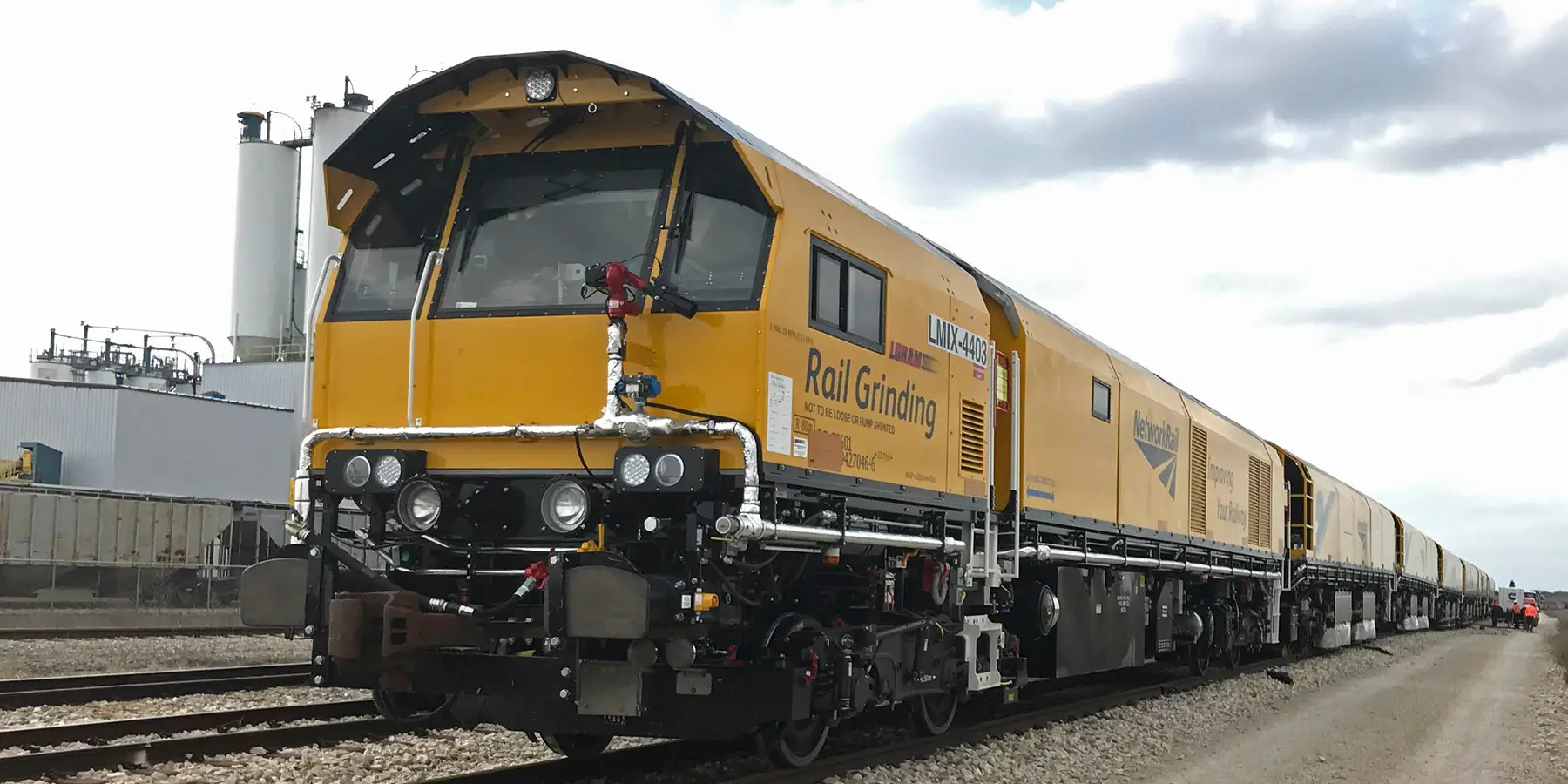
Loram rail grinding is a mechanized maintenance process that uses rail grinding trains equipped with multiple abrasive stones to remove controlled amounts of metal from the rail head. The process restores the target rail profile, removes surface defects, and supports preventive or corrective railway maintenance programs.
Loram is one of the world’s best-known manufacturers and operators of railway maintenance equipment. Its rail grinding portfolio covers heavy-haul mainlines, freight railways, passenger networks, urban transit systems, switches, and crossings.
For equipment owners and maintenance contractors, the grinding machine is only part of the system. Grinding stone dimensions, mounting design, abrasive formulation, and operating parameters must also match the machine and the grinding program.
What Is Loram Rail Grinding?
Loram rail grinding uses powered abrasive grinding stones positioned at controlled angles against the rail head. As the grinding train moves along the track, these stones remove fatigued or irregular surface material and produce the required transverse rail profile.
The principal maintenance objectives include:
- Restoring the designed rail-head profile
- Removing or controlling rail corrugation
- Reducing surface damage associated with rolling contact fatigue
- Correcting localized surface irregularities
- Improving wheel-rail contact conditions
- Supporting preventive rail-maintenance programs
Grinding programs may be preventive, corrective, or transitional. The required material-removal rate and surface finish depend on the rail condition, traffic characteristics, and target profile. Loram groups its current equipment into production, specialty, and transit grinding platforms.
How Does a Loram Rail Grinder Work?
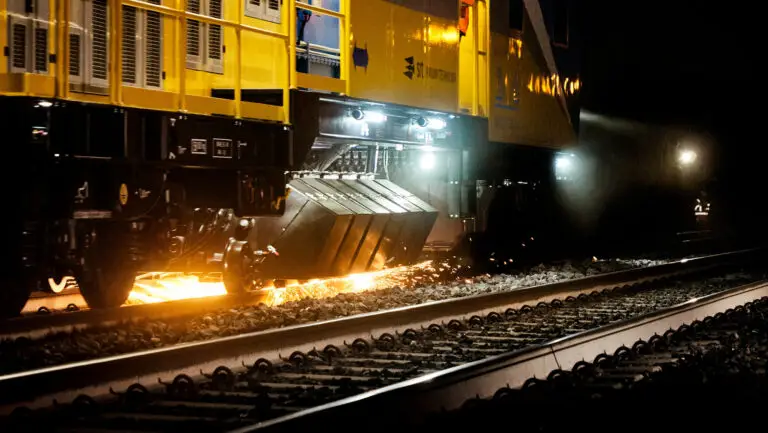
A Loram rail grinder carries multiple electric grinding motors beneath the machine. Each motor drives an abrasive rail grinding stone. The grinding modules can be positioned at different angles across the gauge corner, crown, and field side of the rail head.
Machine-control systems regulate variables such as:
- Grinding angle and motor power
- Grinding pressure and train speed
- Number of passes and grinding pattern
- Target metal removal and surface finish
Large production grinders use many stones simultaneously. Specialty and transit grinders use fewer stones but provide greater flexibility around switches, crossings, restricted clearances, and tight curves.
The visible sparks produced during operation come from contact between the rotating grinding stones and the steel rail. Grinding machines therefore require spark containment, dust collection, and fire-suppression systems appropriate to the operating environment.
Common Loram Rail Grinding Machine Models
Loram’s equipment is commonly divided into production, specialty, and transit rail grinding platforms. Machine specifications may vary by region and configuration, so the equipment serial number and technical documentation should always be checked before replacement grinding stones are ordered.
| Loram model | Grinder category | Typical application | Grinding configuration |
|---|---|---|---|
| RG400 Series | Production grinder | Heavy-haul, freight, and larger commuter networks | 60-120 stones |
| C44 Series | Production/international grinder | Freight and commuter lines with international clearance requirements | Model-dependent |
| RGC Series | Compact production grinder | Passenger, commuter, and urban rail networks | Model-dependent |
| RGI Series | Production and specialty grinder | Networks with clearance, curve-radius, or axle-load restrictions | 16-96 stones |
| RGS Series | Specialty grinder | Switches, crossings, curves, and open track | 24 stones; units may be coupled |
| RGT | Quick-deploy specialty grinder | Localized and road-deployable rail grinding | Configuration-dependent |
| L-Series / LRG | Transit and specialty grinder | Metro, light rail, embedded rail, and restricted routes | 4- or 8-stone carts |
| RGX | Transit grinder | Urban rail grinding in confined environments | Model-dependent |
Loram RG400 Series
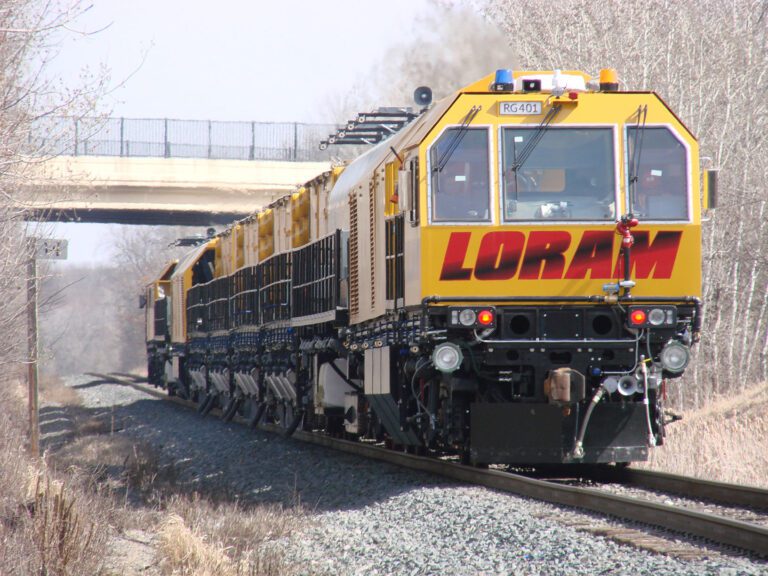
The Loram RG400 is a large production rail grinder developed for heavy-haul, freight, and major commuter railways. Loram lists configurations ranging from 60 to 120 grinding stones and grinding speeds of up to 20 mph (32 km/h), subject to operating conditions.
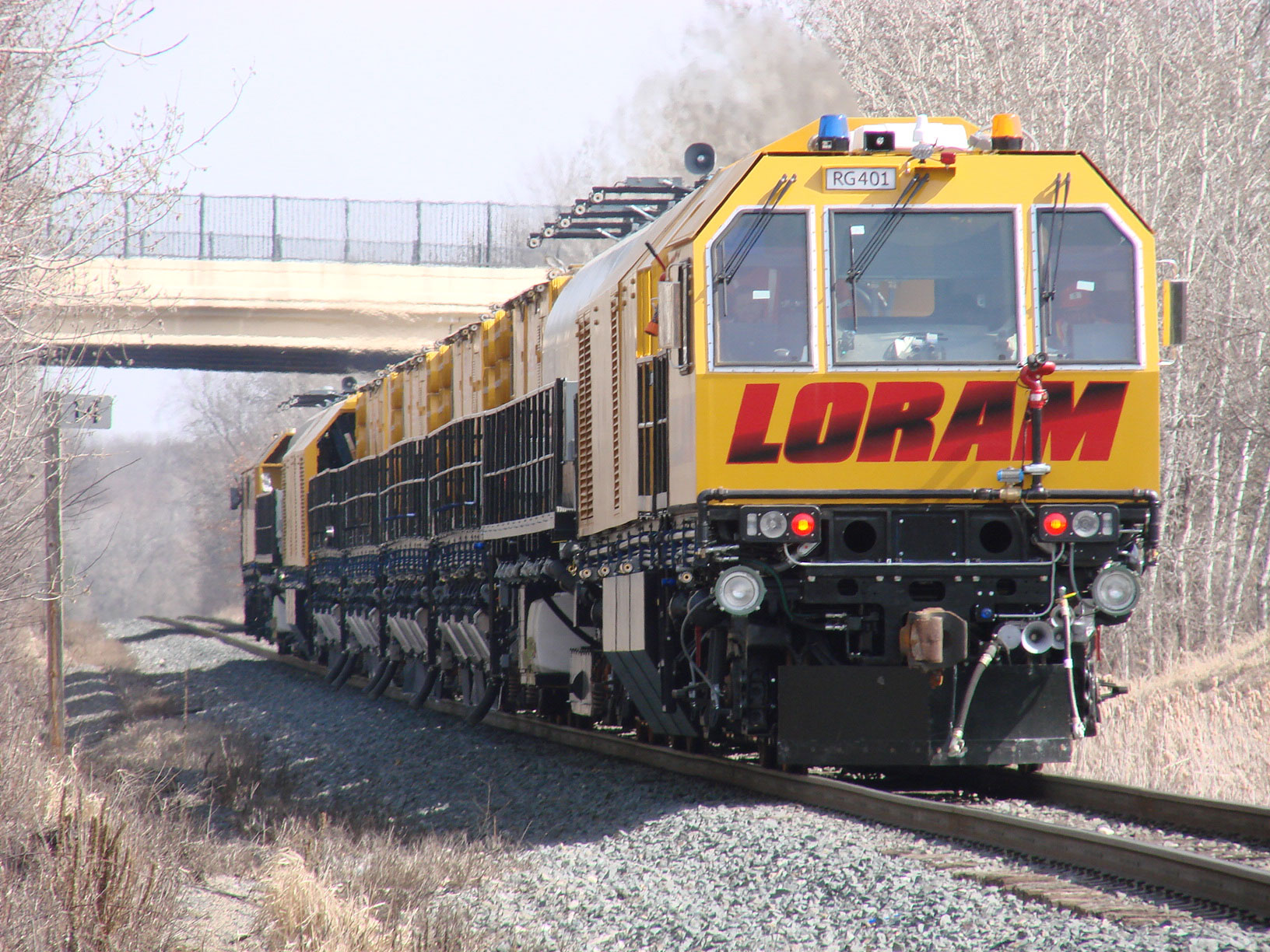
Its high stone count makes the RG400 suitable for production grinding where a railway needs to treat long sections of track during limited maintenance windows. Typical applications include preventive grinding, corrective metal removal, rail-profile restoration, and treatment of rail surface defects. See the official Loram RG400 specifications.
Loram C44 Series
The C44 is designed for international freight and commuter applications where axle load, loading gauge, and machine dimensions may limit the use of a larger North American production grinder.
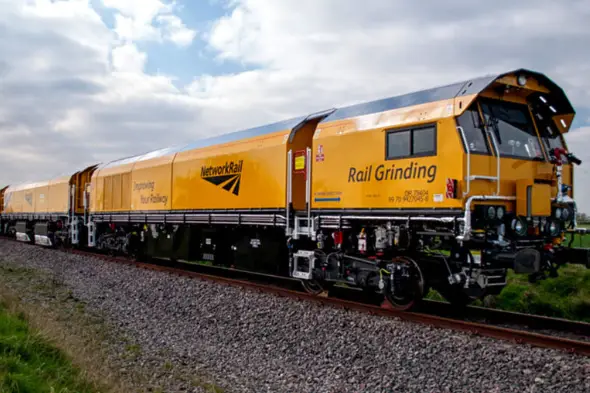
Loram states that the C44 is designed to meet international clearance and weight requirements. It is used for rail-head reprofiling and the treatment of corrugation, corrosion, joint mismatch, and other surface irregularities. See the official Loram C44 equipment page.
Loram RGI Series
The Loram RGI combines production-grinding capacity with a smaller platform. It is intended for commuter, freight, and high-speed rail networks that have tighter curves, lower axle-load limits, or restricted clearances.
Depending on machine configuration, Loram offers the RGI with 16 to 96 grinding stones. The machine uses independently controlled grinding modules to cover different areas of the rail head. Loram’s published material describes the platform as designed around UIC and EN 13231 grinding requirements. Exact configuration and certification should be confirmed from the documentation supplied with each machine.
Loram RGS Series
The RGS is a specialty rail grinder designed for switches, crossings, and other complex track structures. Loram’s current RGS specification describes 24 grinding motors, each rated at 30 hp (approximately 22 kW).
Unlike a production grinder that concentrates on long sections of open track, the RGS needs to work around obstacles and changing rail geometry. Its grinding modules can shift and tilt to reach different parts of the rail head. Loram also states that two RGS machines can be joined to form a 48-stone configuration. Detailed specifications are available on the official Loram RGS page.
Loram L-Series and LRG
The L-Series, also identified as LRG in some regional Loram materials, is designed for transit and specialty grinding. Its smaller footprint is suited to metro and light-rail systems, restricted tunnels, tight curves, embedded rail, switches, crossings, corrugation treatment, and rail-head profiling.
Loram lists four-stone and eight-stone grinding carts for this platform. Different power-car and cart arrangements allow the machine to be adapted to the maintenance window, route clearance, and required production rate.
Loram RGX
The RGX is part of Loram’s transit rail grinding portfolio. It is intended for urban railway environments where noise control, dust collection, restricted clearances, and short maintenance windows require a compact grinding system.
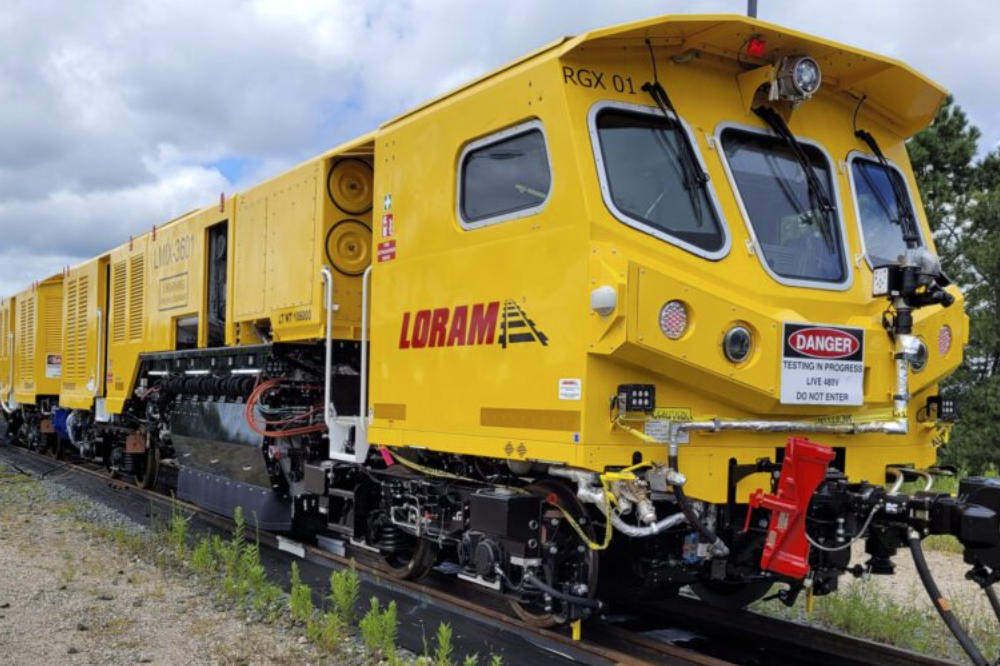
Because regional equipment versions can differ, grinding stone buyers should not select a stone based on the name “RGX” alone. Machine configuration and existing stone information must also be checked.
Loram RGC and RGT
The RGC is a compact production grinding platform aimed at passenger, commuter, and urban networks. It places mainline grinding capability in a smaller machine footprint.
The RGT is a quick-deploy specialty grinder designed for localized work and easier movement between job sites. Its application differs from large production grinding trains, so its abrasive requirements should be evaluated separately.
Production, Specialty, and Transit Rail Grinding Compared
| Grinding category | Best suited to | Main equipment requirement | Grinding stone consideration |
|---|---|---|---|
| Production grinding | Long mainline sections | High output and consistent metal removal | Stable cutting performance across many stones |
| Specialty grinding | Switches, crossings, and complex structures | Flexible stone positioning | Controlled cutting and profile coverage |
| Transit grinding | Metro, light rail, and commuter networks | Compact dimensions and environmental control | Surface finish, noise, and restricted work windows |
A stone developed for one grinder category should not automatically be assumed suitable for another. Even when the outside dimensions appear similar, the bore, mounting system, maximum operating speed, bond, and abrasive composition may differ.
What Grinding Stones Are Used on Loram Rail Grinders?
Loram rail grinding machines use resin-bonded abrasive stones designed for controlled metal removal under demanding operating conditions. The exact abrasive specification depends on the machine, rail hardness, grinding pressure, target profile, and required surface finish.
Common selection factors include:
- Outside diameter, thickness, and bore
- Mounting interface and flange design
- Maximum permissible operating speed
- Abrasive grain type and grit
- Bond formulation
- Rail grade and hardness
- Preventive or corrective grinding duty
- Required material-removal rate and finish
A grinding stone must be selected as a complete technical specification. Matching only the diameter is unsafe and can produce poor grinding results.
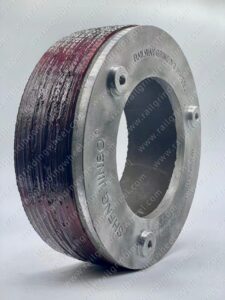
Jumbo Abrasives lists the 260 × 90 × 154 mm rail grinding stone for specified Loram grinding-train applications. Buyers should still submit the machine model, stone marking, and mounting details before compatibility is confirmed. Review available sizes on our rail grinding stone product page.
How Do You Select a Grinding Stone for a Loram Machine?
Start with the machine identity, not the keyword “Loram grinding stone.” Provide the supplier with:
- Loram machine model and configuration
- Machine serial number or production year, when available
- Existing wheel or stone marking
- Outside diameter, thickness, and bore
- Mounting drawing or clear mounting photographs
- Maximum operating speed
- Rail grade and current rail condition
- Grinding application and target profile
- Required quantity, destination country, and delivery date
Two Loram grinders carrying a similar model designation may use different consumables because of regional requirements, upgrades, or machine configuration. Jumbo Abrasives therefore confirms compatibility against the buyer’s technical information before preparing a production recommendation.
Can Aftermarket Grinding Stones Be Used on Loram Rail Grinders?
Compatible replacement grinding stones may be considered when their dimensions, mounting system, speed rating, and grinding characteristics have been technically verified for the specific machine.
Compatibility should never be based solely on a product photograph or machine brand. The supplier should review the original stone marking, drawings, and operating requirements. Trial procedures and approval requirements should be agreed upon by the machine owner, grinding contractor, and responsible railway engineering team.
Jumbo Abrasives manufactures rail grinding wheels for multiple grinding-train systems. Any reference to Loram identifies the intended equipment application and does not imply affiliation with, approval by, or endorsement from Loram Maintenance of Way, Inc.
Why Grinding Stone Consistency Matters
A production grinder can operate dozens of stones at the same time. Variation between stones may affect cutting behavior, wear rate, surface finish, and the machine’s ability to reproduce the planned grinding pattern.
Grinding stone evaluation should cover more than initial cutting speed. Procurement and engineering teams should also review dimensional consistency, balance and structural integrity, batch traceability, wear consistency, profile retention, surface-finish results, storage requirements, and test documentation.
For large grinding programs, a controlled trial on the intended machine and rail condition provides better evidence than a generic service-life claim. Our rail grinding wheel FAQ explains additional selection and maintenance considerations.
Frequently Asked Questions About Loram Rail Grinding
What does a Loram rail grinder do?
A Loram rail grinder removes a controlled layer of metal from the rail head using multiple powered abrasive stones. The process restores the desired profile, treats corrugation and surface damage, and supports preventive or corrective rail-maintenance programs.
What is the most common Loram production rail grinder?
The RG400 is Loram’s principal large production grinding platform for heavy-haul, freight, and larger commuter railways. Loram offers it in configurations from 60 to 120 grinding stones, depending on the railway’s production requirements.
Which Loram machine is used for switches and crossings?
The Loram RGS is specifically designed for specialty grinding around switches, crossings, and other complex track structures. Loram also offers smaller or quick-deploy specialty platforms for different operating environments.
Which Loram grinder is suitable for urban transit systems?
Loram’s transit and compact platforms include the L-Series or LRG, RGX, and RGC. The correct platform depends on loading gauge, curve radius, track structure, environmental limits, and available maintenance time.
Are all Loram grinding stones interchangeable?
No. Grinding stones may differ in dimensions, bore, mounting system, speed rating, abrasive formulation, and intended application. Compatibility must be checked against the exact Loram machine and existing stone specification.
Request a Loram Grinding Stone Compatibility Review
Send Jumbo Abrasives the Loram machine model, current grinding stone marking and dimensions, mounting details, rail condition, required quantity, destination country, and delivery date. Our technical team will review the information and recommend an appropriate rail grinding stone specification.
Contact Jumbo Abrasives for a compatibility review and quotation.