Railroad Track Grinder: Types, Uses and Grinding Wheel Guide
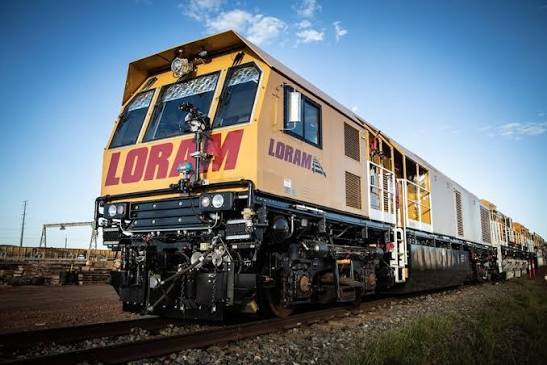
Table of Contents
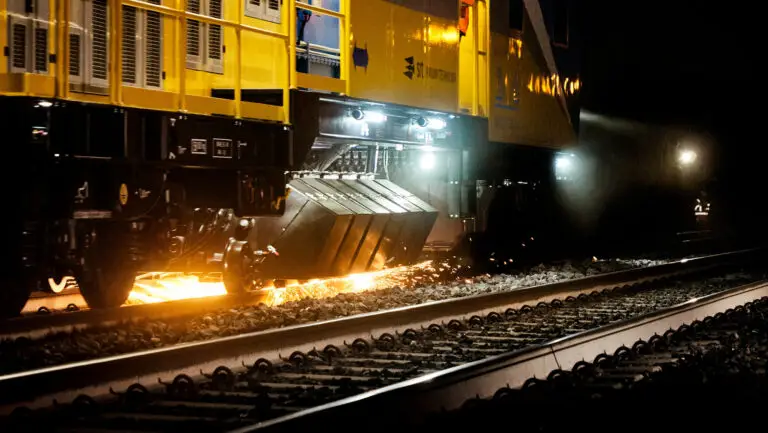
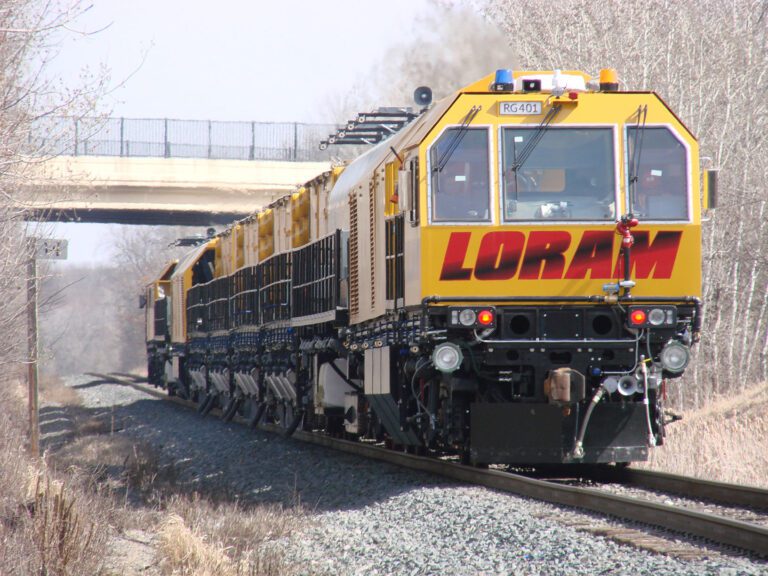
A railroad track grinder is a railway maintenance machine that removes a controlled amount of steel from the railhead to restore the rail profile and remove surface defects. Large grinding trains handle continuous mainline work, while portable rail profile grinders are used for welds, switches, frogs, crossings and local repairs. The machine is different from the grinding wheel fitted to it.
What Does a Railroad Track Grinder Do?
A railroad track grinder restores the working shape of a rail by removing selected surface metal. The goal is not simply to make the rail shiny. The grinding operation must match the required rail profile, defect type, machine setting and maintenance plan.
A railroad track grinder may be used for:
- Rail profile restoration
- Corrugation removal
- Rolling contact fatigue and surface defect removal
- Weld and joint grinding
- Switch and turnout maintenance
- Frog and crossing grinding
- Preventive and corrective rail grinding
Harsco Rail describes production grinding as a way to control wheel-rail contact, remove corrugation and defects, and maintain the rail profile. Its grinder range includes machines with different numbers of grinding stones and profile measurement systems.
The correct machine depends on the work area. A production grinder is designed for long sections of open track. A portable profile grinder is more suitable when the operator must work around a weld, switch, frog or isolated defect.
How Does a Railroad Track Grinder Work?
A railroad track grinder uses one or more abrasive wheels or stones mounted to a grinding head. The machine controls the wheel position, contact angle and grinding pressure while the equipment moves along the rail or is guided across a local section.
- Inspect the rail profile and identify the defect.
- Select a grinder suitable for the rail section and application.
- Confirm the grinding wheel dimensions, mounting and maximum operating speed.
- Position the grinding head at the required angle.
- Remove material in controlled passes.
- Inspect the finished rail profile and surface.
Large grinding trains may use multiple grinding units arranged along the vehicle. Portable machines usually use one grinding head and require the operator to control movement and pressure.
A measurement system can help operators compare the existing rail profile with the target profile. Harsco lists profile measurement and corrugation measurement systems as available machine features.
The grinding wheel is the contact tool. If the wheel specification is wrong, the machine may not mount correctly, reach the intended profile or operate within the required speed range.
Main Types of Railroad Track Grinders
Production rail grinding trains
Production grinders are large, self-propelled railway maintenance machines designed for long sections of track. They are used by infrastructure operators, grinding contractors and railway maintenance companies.
Typical applications include heavy-haul mainline maintenance, freight railway corridors, high-volume passenger routes, preventive grinding programs, corrective profile grinding, and corrugation or defect removal.
These machines may use dozens of grinding stones. Their output depends on the machine configuration, rail condition, grinding speed, number of grinding units and maintenance plan.
Portable rail profile grinders
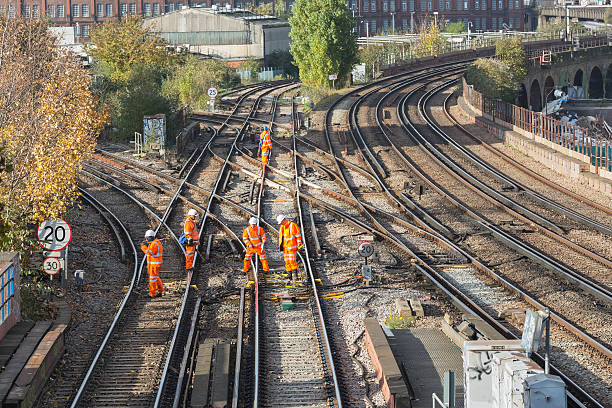
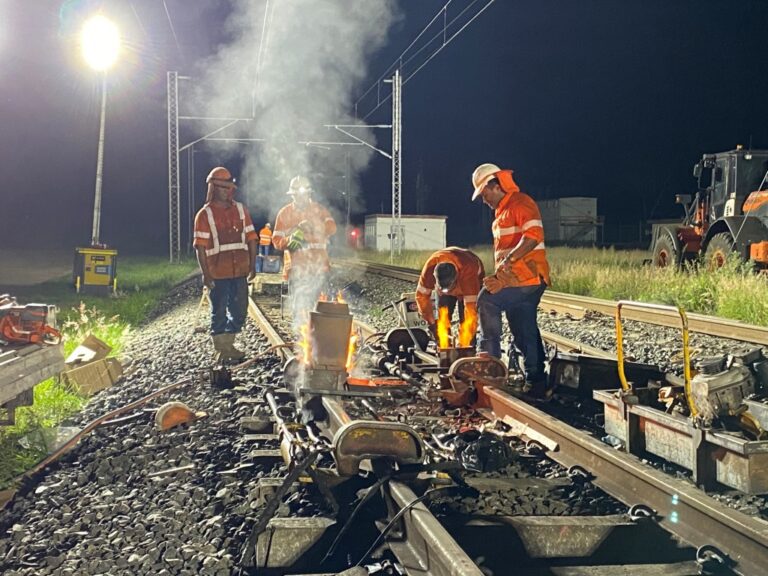
A portable railroad track grinder is used for local work. It can be moved to the rail by a small crew and positioned around the work area. Portable profile grinders are commonly used for weld finishing, local rail profile correction, small defects, railhead grinding and rail-side grinding.
Pandrol’s Omega Grinder is designed for railheads, frogs, switches and rail profiles. Its modular design allows the tool to be assembled and removed from the track more easily than a large grinding train.
Switch and turnout grinders
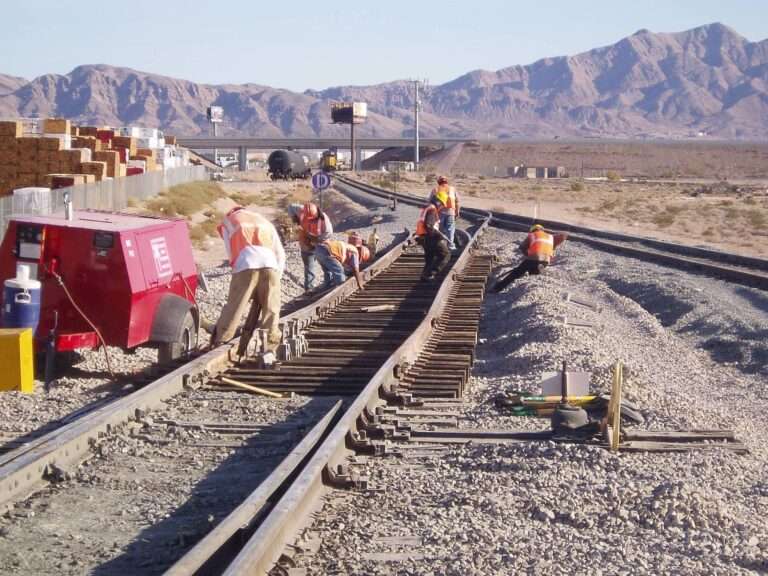
Switch and turnout grinders are designed for areas where the rail geometry changes. A standard open-track machine may not provide the access or adjustment range needed for frogs, switch points, wing rails and crossings.
These grinders are often selected for turnouts, switch points, frogs, guard rails, crossings and rail welds near complex trackwork. The wheel shape, mounting and working angle are especially important in these applications.
High-speed grinding systems
High-speed grinding systems work at higher operating speeds than conventional corrective grinding equipment. They are generally used for preventive rail maintenance and regular removal of small surface irregularities.
High-speed grinding does not mean that any wheel can be operated at a higher speed. The wheel’s rated speed must meet the equipment requirement.
Railroad Track Grinder vs. Rail Grinding Wheel
A railroad track grinder is the machine. A rail grinding wheel is the abrasive consumable mounted on that machine.
| Item | Railroad track grinder | Rail grinding wheel |
|---|---|---|
| Function | Moves, positions and controls the grinding unit | Removes metal from the rail |
| Type | Production train, portable grinder or turnout grinder | Specified abrasive wheel or stone |
| Main selection factors | Machine capacity, grinding heads, application and access | Diameter, thickness, bore/thread, abrasive grade and speed |
| Replacement cycle | Long equipment lifecycle | Regular consumable replacement |
This distinction matters because a buyer searching for “railroad track grinder” may actually need replacement grinding wheels for an existing Loram, Harsco, Speno, Vossloh, SRT, Geismar or Robel machine.
Jumbo Abrasives supplies rail grinding train wheels and profile grinding wheels for railway maintenance applications. Exact compatibility should be confirmed from the current wheel marking and machine documentation.
How to Choose the Correct Grinding Wheel
Before requesting a quotation, collect the following information:
- Grinding machine manufacturer
- Exact machine model
- Current wheel marking
- Outside diameter and thickness
- Bore, thread or mounting arrangement
- Abrasive grade and bond, if available
- Maximum operating speed
- Grinding application and rail condition
- Required quantity
- Destination country and delivery date
Do not identify a replacement wheel from outside diameter alone. Two wheels can have a similar diameter but different thickness, bore, mounting method or speed rating.
If the abrasive grade, bond, maximum speed or mounting details are unknown, send a clear photo of the current wheel and machine nameplate. These details should be confirmed with the engineering team before production.
Representative Wheel and Machine Combinations
The following examples are based on the machine and wheel relationships shown in Jumbo Abrasives’ public grinding train guide. They are representative references, not a universal interchange list.
| Grinder system | Example models | Publicly listed wheel example |
|---|---|---|
| Loram | RG300, RG400, RGX | 260×90×154 |
| Speno | RR16, RR24 | 250×78×150 |
| Harsco Rail | RGH10C, RGH20C, RGH30C | 152×80×M20 |
| Vossloh | HSG-city, HSG-2 | 120×73×40 |
| GEMAC | CMC20, GMC-96X | 152×80×M20 |
| AUTECH | AT VM 8000, AT2200 | 120×110×M20L |
For portable profile grinders, public examples include 125×65×M20 for Robel applications, 150×75×55-4×M8 for Geismar applications, and 150×75×M20 for Goldschmidt applications. Confirm the exact model, wheel marking and mounting details before treating any combination as compatible.
Safety Checks Before Installing a Wheel
Grinding wheels are high-speed components. The wheel must be inspected and installed according to the machine manufacturer’s instructions.
- Check the wheel for cracks, chips or shipping damage.
- Confirm the wheel dimensions and mounting arrangement.
- Confirm that the rated operating speed meets the machine requirement.
- Install the correct blotter, flange or retaining parts.
- Check the guard and spark protection.
- Make sure the wheel is securely mounted.
- Use the required personal protective equipment.
- Restrict operation to trained and authorized personnel.
The Racine Hydraulic Rail Profile Grinder manual specifies a particular wheel diameter, thickness and 3,300 RPM requirement for that model. That specification applies to the stated machine and must not be copied to another grinder.
Never assume that a wheel rated for one railroad track grinder is safe for another machine.
How to Order Replacement Wheels
A useful RFQ should include the machine manufacturer and model, current wheel marking, wheel dimensions, bore or thread, rail application, photos of the wheel and machine plate, quantity, destination country and delivery date.
Send the machine model, wheel dimensions, quantity and destination country so the technical team can confirm compatibility and prepare a quotation.
For machine references, visit the Grinding Trains Library. For replacement wheel options, see the Rail Grinding Train Wheel product category.
Frequently Asked Questions
What is a railroad track grinder?
A railroad track grinder is a machine used to restore rail profiles and remove surface defects such as corrugation, weld irregularities and rolling contact fatigue. Large grinding trains work on long track sections, while portable rail profile grinders handle local work around welds, switches, frogs and crossings.
Is a railroad track grinder the same as a rail grinding machine?
The terms usually refer to the same general equipment category. “Railroad track grinder,” “rail grinder” and “rail grinding machine” can describe production grinding trains, portable profile grinders or turnout grinders. The correct term depends on the machine type and the maintenance application.
What grinding wheel does a railroad track grinder use?
The correct wheel depends on the grinder model, wheel dimensions, mounting arrangement, abrasive specification and maximum operating speed. Jumbo’s public guide lists different wheel sizes for Loram, Speno, Harsco, Vossloh, GEMAC and AUTECH systems. Confirm the exact specification before ordering.
Can I use a wheel from another grinder?
Only when the dimensions, mounting, abrasive specification and speed rating have been confirmed as suitable for the target machine. Similar-looking wheels are not automatically interchangeable. Send the current wheel marking, machine model and mounting details to the supplier for technical confirmation.
Which railroad track grinder is used for welds and turnouts?
Portable rail profile grinders and turnout grinders are commonly used for welds, switches, frogs and crossings because they provide local access and adjustable grinding angles. The correct machine depends on rail geometry, access, power source, wheel size and the operator’s maintenance procedure.
How do I request a rail grinding wheel quotation?
Provide the grinder manufacturer and model, current wheel dimensions, mounting details, application, quantity, destination country and delivery date. Photos of the existing wheel and machine nameplate help the supplier check compatibility before preparing a quotation.
Technical References
- Federal Railroad Administration: Railroad Maintenance-of-Way Equipment
- Harsco Rail: Production Grinders
- Pandrol: Omega Grinder
- Racine Railroad Products: Hydraulic Rail Profile Grinder Manual