In the architecture of modern transport infrastructure, heavy-haul freight networks and high-speed transit lines rely heavily on a small but vital component: the rail spike. Often referred to globally as railroad track spikes, these specialized fasteners serve as the anchor connecting the steel rails and tie plates to the underlying track sleepers (ties).
Without the continuous clamping force of these rugged metal components, maintaining accurate track gauge would be impossible, presenting severe risks of track shifting or train derailment.
What is a Rail Spike and Why is It Critical?
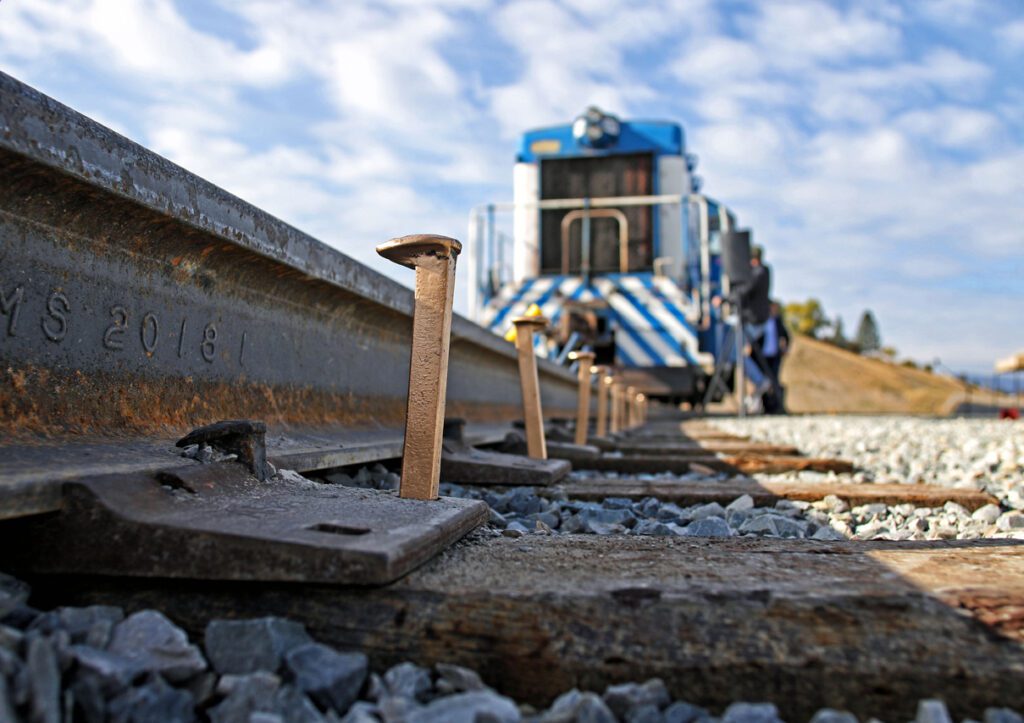
A rail spike is a specialized, heavy-duty industrial fastener engineered with an offset head and a chisel-shaped point. Driven directly into wooden or composite sleepers, its geometric profile creates high friction against the wood grain, preventing the fastener from loosening under intense cyclic loads.
The primary purpose of rail spikes extends beyond holding the rail down; they are dynamically engineered to resist both the lateral forces exerted by trains rounding sharp curves and the longitudinal stresses triggered by heavy braking or acceleration.
What Are the Main Types of Rail Spikes Used Today?
Track engineers deploy distinct variations of rail spikes depending on the specific track environment, the underlying sleeper material (wood vs. concrete), and the anticipated axle loads.
1. Traditional Dog Spikes (Cut Spikes)
Commonly known as the “dog spike” due to the two lugs on either side of its offset head resembling a canine’s face, this is the classic choice for wooden sleeper tracks.
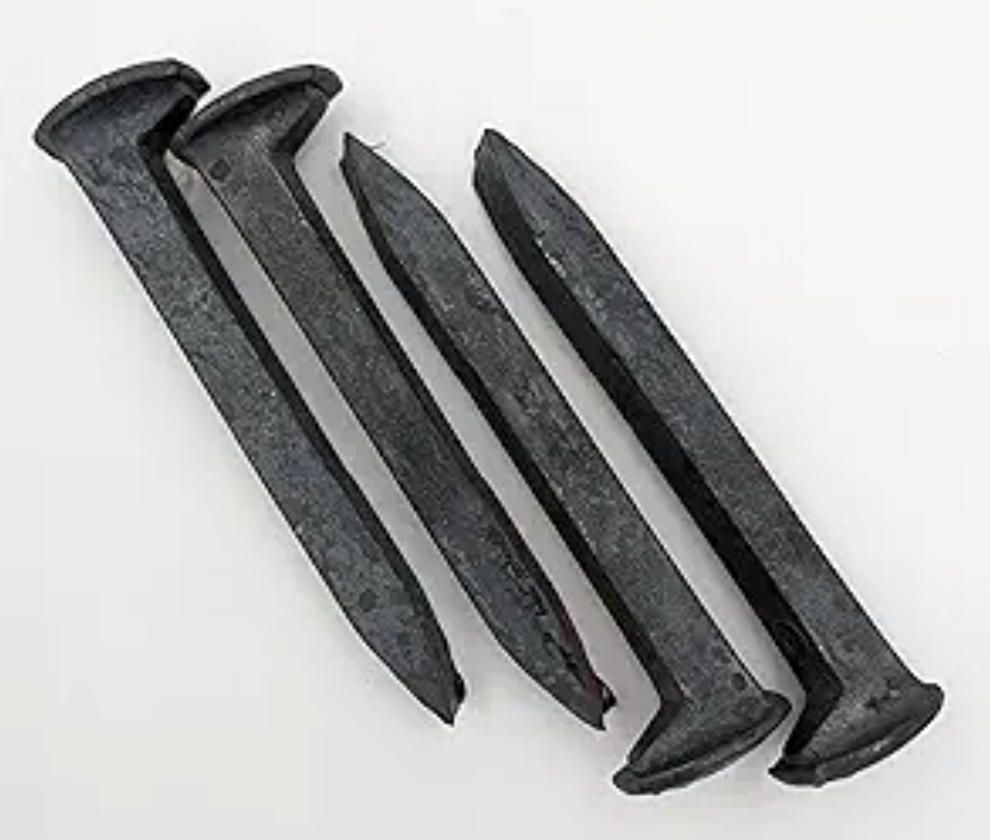
Design Characteristics: Features a square or rectangular cross-section (typically 16mm) with a sharp, chisel-edged tip. Standard sizes widely used across Class I freight networks include include 5/8”x6” and 9/16”x5-1/2”
How it Works: The chisel point cuts clean through the wood fibers when driven, utilizing the natural elasticity of the timber to lock the shank firmly in place.
2. High-Strength Screw Spikes (Sleeper Screws)
When tracks are subjected to extreme heavy-haul environments or require mounting directly to pre-cast concrete sleepers, traditional cut spikes are replaced by threaded screw spikes.
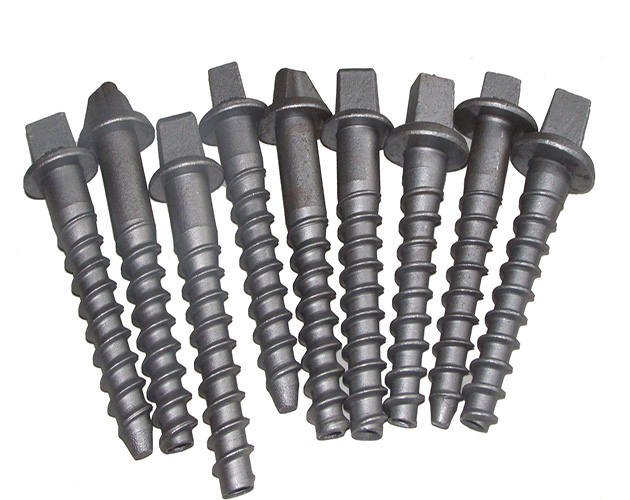
Design Characteristics: These feature an engineered threaded lower shank matched with a robust square or hexagonal drive head (such as the standard Ss series sleeper screws like Ss1, Ss5, and Ss8).
Mechanical Advantage: Screw spikes deliver a pull-out resistance that is 50% to 100% higher than standard dog spikes. They are frequently deployed in tight turnouts, switches, and heavy freight transit zones where maximum vertical clamping force is required.
3. Elastic Spring Spikes (M-Spikes)
For specialized logistics corridors, mining rail loops, and cold-storage warehouse infrastructure, elastic spring spikes offer distinct performance advantages.
Design Characteristics: Forged from spring steel into a dual-pronged, M-shaped geometric configuration.
Mechanical Advantage: The unique M-bend behaves like an independent leaf spring. When the rail encounters dynamic uplifts from a passing train, the elastic deformation absorbs the shock waves, dampening vibration and preserving structural integrity over millions of loading cycles.
4. Anti-Frost / Freezing Damage Spikes
In high-latitude regions prone to heavy frost-heave cycles, standard track alignment fluctuates as water expands in the subgrade. Engineers address this by deploying extended-length anti-frost spikes ranging from 185mm to 280mm to accommodate the variable thickness of shimming plates used during seasonal track adjustments.
Material and Manufacturing Excellence for Rail Fasteners
The structural performance of a track line depends directly on the metallurgical composition and forging quality of its fasteners. High-quality rail spikes must possess the toughness to endure rapid, heavy hammering during installation without their heads snapping away from the main shank.
Steel Grades and Material Integrity
Industrial manufacturers utilize tough, low-to-medium carbon steels (such as Q235, 45#, or 55Q) or corrosion-resistant stainless steels. International compliance ensures these components meet rigorous global standards, including AREMA, ASTM, UIC, DIN, and BS.
The Production Process
Premium industrial fasteners are produced using highly automated machine-forging lines. Unlike primitive hand-forged alternatives, automated machine manufacturing guarantees that the spike head and shank remain a single, solid piece of metal free of structural welds or macro-segregation cracks.
Advanced anti-corrosion surface treatments further extend their operational lifespan in harsh environments:
Hot-Dip Galvanizing (HDG): Ideal for coastal routes and chemical-heavy environments.
Black Oxide / Oiled: Optimized for cost-effective standard applications.
Zinc Plating / Sherardizing: Provides superior uniform coating thickness for precise tolerances.
Frequently Asked Questions (FAQ)
What is the difference between a dog spike and a screw spike?
A dog spike is a smooth, square-shanked cut nail driven into wooden ties by brute force, relying on wood-grain friction. A screw spike features deep industrial threads driven into pre-drilled or plastic-sleeved holes, providing double the pull-out resistance, making it suitable for concrete sleepers and heavy-stress rail zones.
Why do rail spikes fail, and how are they inspected?
Over time, intense traffic and heavy curved territory can cause internal stress fractures, often breaking the spike 1 to 1.5 inches beneath the sleeper surface. Modern rail infrastructure networks utilize advanced Nondestructive Evaluation (NDE) methods, such as Ultrasonic Testing (UT), to scan internal metal structures and detect hidden broken spikes automatically.