Ultimate Guide to Railway Ballast: Functions, Materials, and Maintenance
Table of Contents
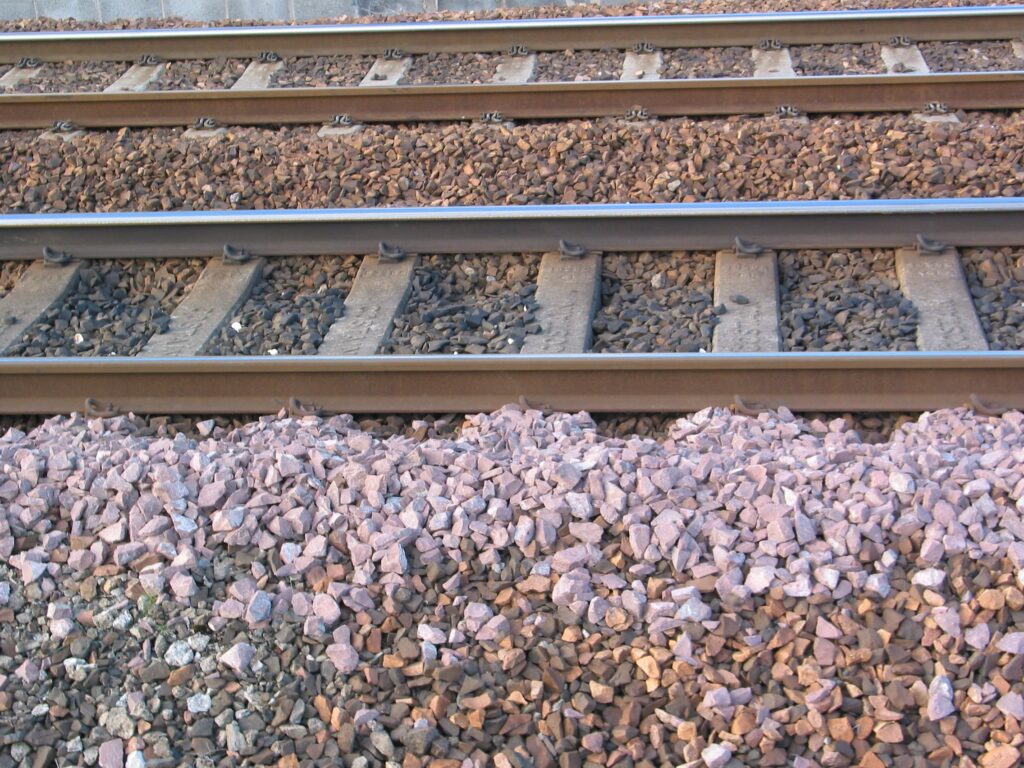
When looking at a train track, the rails and concrete sleepers (ties) naturally draw the eye. However, beneath them lies the true unsung hero of rail infrastructure: railway ballast.
Despite the rise of ballastless tracks in modern high-speed rail, railway ballast (also commonly referred to as track ballast or railroad ballast) remains the backbone of global rail networks. In this comprehensive guide, we explore what railway ballast is, its critical functions, selection criteria, and how it is maintained to ensure safe rail operations.
What is Railway Ballast?
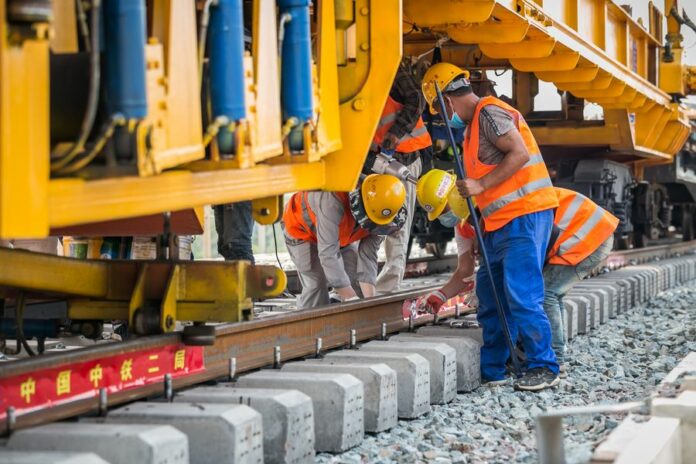
Railway ballast is the granular, high-density crushed stone layer packed around and beneath railway sleepers. It forms the track bed, acting as the primary structural interface between the track framework and the underlying subgrade (the natural earth foundation).
The term originates from the maritime industry, where “ballast” referred to the heavy stones placed in the hulls of ships to provide stability. In railway engineering, it serves a very similar stabilizing purpose.
What are the Functions of Railway Ballast in Track Construction?
Railway ballast is not just “decorative gravel.” It performs several vital mechanical and environmental roles that keep trains running safely:
Load Distribution and Pressure Dissipation: Trains weigh thousands of tons and travel at high velocities. Ballast distributes these massive, concentrated vertical loads from the sleepers uniformly across the broader subgrade, preventing ground failure.
Track Stabilization (Preventing Displacement): The interlocking nature of jagged stones creates high friction, locking the sleepers firmly in place. This prevents longitudinal movement (caused by braking and acceleration) and lateral shifting (caused by centrifugal forces and thermal expansion), preserving the exact track gauge.
Shock Absorption and Vibration Damping: While individual stones are rigid, the collective ballast bed possesses pseudo-elasticity. It absorbs intense vibrations and heavy dynamic shocks from passing trains, protecting concrete sleepers and steel rails from fracturing while reducing environmental noise.
Rapid Track Drainage: Standing water softens the subgrade and corrodes steel components. High-quality track ballast features high porosity, allowing rainwater to drain instantly away from the track structure into side ditches.
Vegetation Inhibition: Weed growth can destabilize the track foundation. A thick layer of clean ballast lacks soil and standing water, forming a hostile environment that prevents plants from taking root.
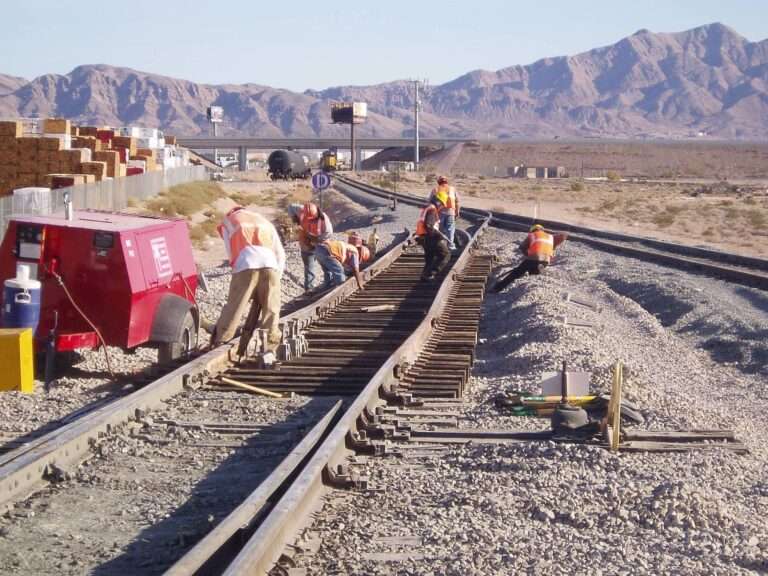
Track Geometry Adjustability: Unlike concrete slab tracks, ballasted tracks are highly adjustable. Rail maintenance crews can easily lift, lower, or realign tracks by adding, removing, or shifting the ballast stones.
Materials and Selection Standards for High-Quality Ballast
Not all stones are suitable for rail tracks. Soft rocks crush easily under heavy loads, leading to rapid track deterioration. To withstand immense pressure and weather extremes, railway ballast must be exceptionally hard, durable, weather-resistant, and angular.
Structural Requirements
Shape: Stones must have sharp, angular edges. Round river pebbles roll under pressure; angular stones lock together (“interlock”) to form a stable, immovable bed.
Size: The standard particle size for mainline track ballast ranges strictly between 20mm and 70mm to optimize both load-bearing capacity and drainage.
What is the Best Stone for Railway Ballast? (Material Comparison)
The following technical matrix compares common track ballast materials, including igneous, metamorphic, and sedimentary rocks, based on their durability and specific rail applications:
| Rock Category | Specific Material Types | Durability Rating | Best Used For |
| Igneous Rock | Basalt, Granite, Andesite, Rhyolite | Excellent (Top Tier) | High-speed rail, heavy freight lines, mainline tracks |
| Metamorphic / Sedimentary | Quartzite, Hard Limestone | Good | Regional transit, medium-load freight lines |
| Industrial Byproducts | Slag (Steel/Blast Furnace) | Moderate to Good | Standard freight, industrial sidings |
| Gravel & Sand | Screened Pit Gravel | Low | Low-traffic branch lines, yard tracks, railyards |
Ballast Fouling: Why Track Beds Deteriorate
Over time, railway ballast undergoes a process called degradation. Heavy axle loads grind the stone edges together, smoothing them out and creating fine dust. Concurrently, environmental factors like wind-blown dirt, coal dust from freight, and subgrade mud rise up into the track bed.
This accumulation of fine particles is known as ballast fouling or contamination.
The Dangers of Fouled Ballast:
Loss of Drainage: Fine particles plug the gaps between stones, trapping water and causing the track bed to become muddy (“mud pumping”).
Loss of Elasticity: The track bed hardens or cakes together. Without flexibility, the stress transferred to concrete sleepers increases by 50% to 80%, drastically accelerating track failure.
How is Railway Ballast Maintained? (Tamping & Cleaning)
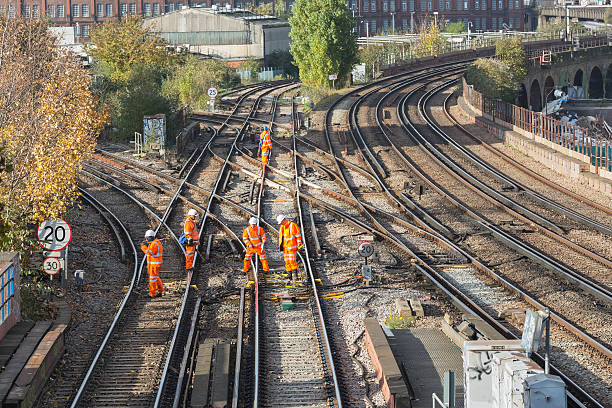
To combat ballast fouling and maintain track safety, rail networks rely on specialized maintenance machinery:
1. Ballast Tamping (Alignment Correction)
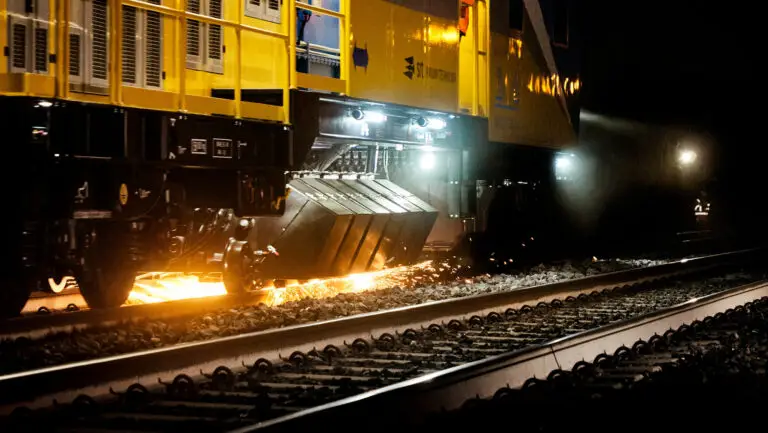
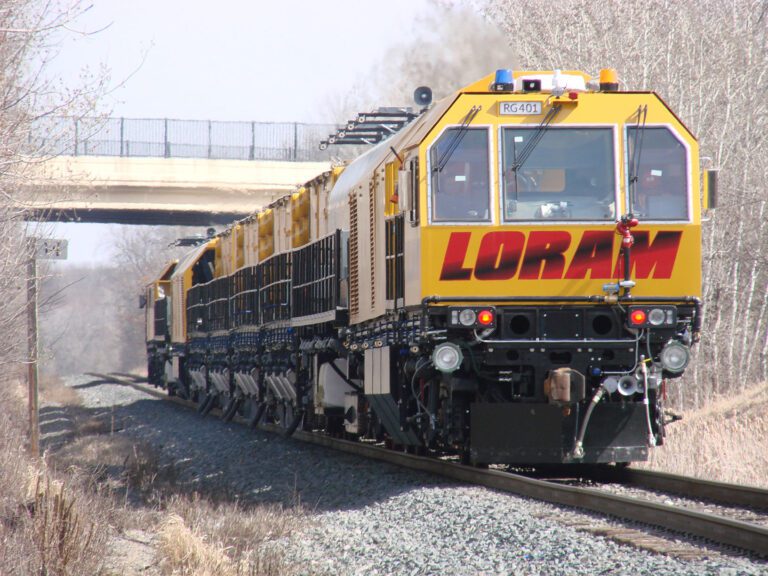
As trains pass, localized sinking occurs. A tamping machine tracks along the rails, mechanically lifts the track to the correct height, and inserts tamping tines deep into the ballast. These tines vibrate and squeeze the stones tightly back underneath the sleepers, restoring perfect vertical and horizontal track alignment.
2. Ballast Cleaning and Screening
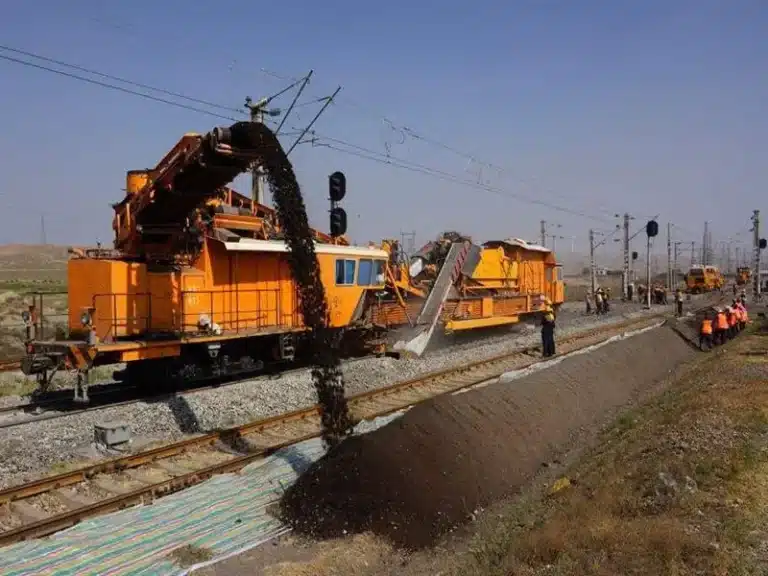
When fouling becomes severe, a ballast cleaning machine is deployed. This massive machine undercuts the track, scoops up the fouled ballast, and runs it through internal vibrating mesh screens. The fine mud and debris are discarded, while the clean, oversized stones are returned to the track bed alongside fresh top-up ballast.
3. Auxiliary Maintenance
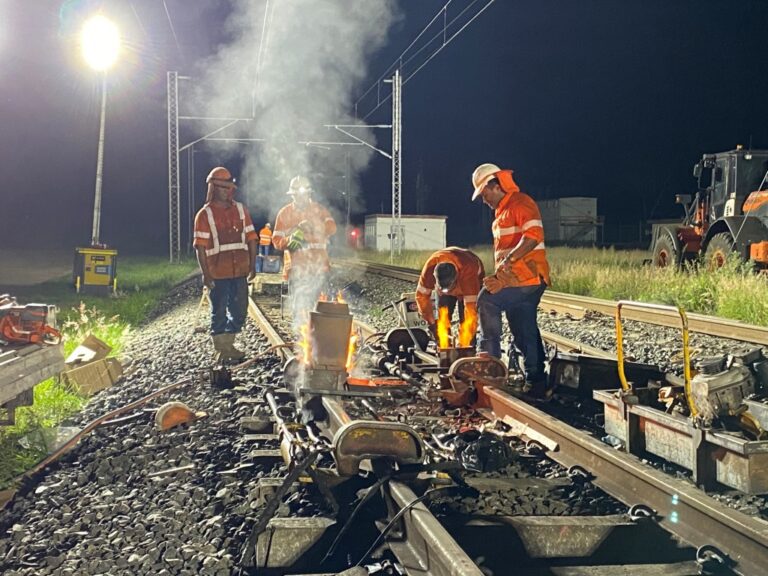
Crews also use specialized tools like sand removers in arid zones to clear desert dust, brush cutters to eliminate encroaching perimeter vegetation, and shoulder cleaners to ensure edge drainage remains unobstructed.
Frequently Asked Questions (FAQ)
What is the best stone for railway ballast?
Basalt and granite are widely considered the best materials for railway ballast due to their extreme hardness, high resistance to abrasion, and ability to fracture into sharp, interlocking angles.
Why don’t they use concrete instead of rocks for all train tracks?
While concrete slab tracks (ballastless tracks) require less day-to-day maintenance, they are significantly more expensive to construct initially. Furthermore, if a concrete foundation cracks or shifts due to earthquakes or soil settlement, it is incredibly difficult and costly to repair, whereas ballasted tracks can be easily adjusted with standard maintenance machinery.
How deep is the railway ballast layer?
Typically, the main ballast layer is between 300mm and 500mm deep beneath the sleepers, depending on the line’s speed limit and expected weight capacity. A secondary, finer layer called “sub-ballast” is laid beneath it to protect the subgrade.
Conclusion
Though it resembles simple crushed stone, railway ballast is an engineered component essential to modern transportation. By combining simple geometric interlocking with physics, it safely absorbs millions of tons of force daily. Proper material selection and proactive maintenance—such as tamping and cleaning—are the keys to extending track lifespans and ensuring the safety of passengers and cargo worldwide.