Rail Grinding Classification, Application Scenarios & Engineering Guide
Table of Contents
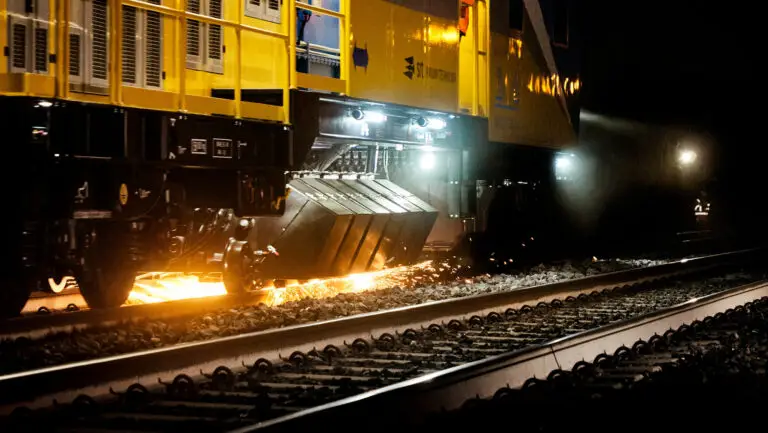
Rail grinding is a vital preventive and corrective maintenance technology in modern railway engineering. As axle loads, operational speeds, and annual gross tonnage (MGT) increase, rails suffer from surface defects such as Rolling Contact Fatigue (RCF), Head Checks, Spalling, and Rail Corrugation.
By utilizing specialized abrasive rail grinding wheels mounted on grinding trains or modular equipment, track maintenance teams can restore rail surface smoothness, optimize the transverse profile, redistribute wheel-rail contact stress, and extend rail service life by 30% to 50%.
1. Classification by Maintenance Stage & Purpose
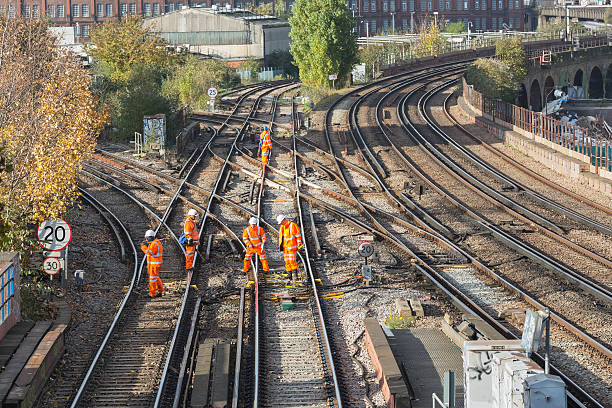
According to international track maintenance standards, rail grinding is strategically categorized into four distinct lifecycle stages within overall railway track maintenance:
1.1 Pre-Grinding (Preparatory / Initial Grinding)
- Application Timing: Performed on newly laid or newly replaced rails prior to formal revenue service operation.
- Core Purpose: Removes the soft decarburized layer created during high-temperature rolling manufacturing, mill scale, surface rust, handling scratches, and vertical irregularities at welded joints on rail track metal.
- Metal Removal Depth: Typically 0.2 mm – 0.3 mm.
- Engineering Value: Eliminating the weak decarburized layer prevents micro-fatigue cracks from rapidly forming under initial wheel loads. It is a mandatory acceptance procedure under standards like EN 13231 and AREMA.
1.2 Preventative Rail Grinding
- Application Timing: Executed as a routine, cyclical maintenance procedure on active lines (typically every 10–30 MGT depending on traffic density).
- Core Purpose: Removes micro-cracks and early RCF damage while they are still shallower than 0.2 mm, preventing them from propagating deeper into the rail steel.
- Metal Removal Depth: Extremely shallow single-pass removal (0.05 mm – 0.15 mm).
- Engineering Value: The most cost-effective strategy in Lifecycle Cost (LCC) management. It maintains ideal wheel-rail contact geometry with minimal steel consumption.
1.3 Corrective Rail Grinding (Reprofiling / Remedial)
- Application Timing: Applied as a reactive measure on severely degraded rails exhibiting deep corrugation, heavy spalling, plastic deformation, or severe wheel burns.
- Core Purpose: Completely cuts away damaged surface metal to rebuild a clean steel surface and restore the target cross-sectional profile.
- Metal Removal Depth: Heavy removal (0.5 mm – 1.5 mm), often requiring multiple passes of heavy grinding trains at reduced speeds.
- Engineering Value: Restores severely damaged rails to safe operating condition, though it consumes significant rail material and reduces overall rail lifespan.
1.4 Profile / Special Grinding (Transverse Reshaping)
- Application Timing: Targeted maintenance using specialized profile grinding wheels for specific track geometries, such as small-radius curves, switches/turnouts, and high-noise urban zones.
- Core Purpose: Alters the transverse head profile to shift the contact band away from damaged areas (e.g., gauge corner relief) or to match specific rolling stock wheel profiles.
- Metal Removal Depth: Variable, ranging from 0.1 mm to 0.5 mm across specific profile zones.
2. Classification by Processing Mechanism & Speed
Different equipment mechanisms provide varying combinations of metal removal capacity, surface finish quality, and track window requirements:
| Technology Type | Operating Speed | Primary Mechanism | Best Used For | Key Advantage & Limitation |
|---|---|---|---|---|
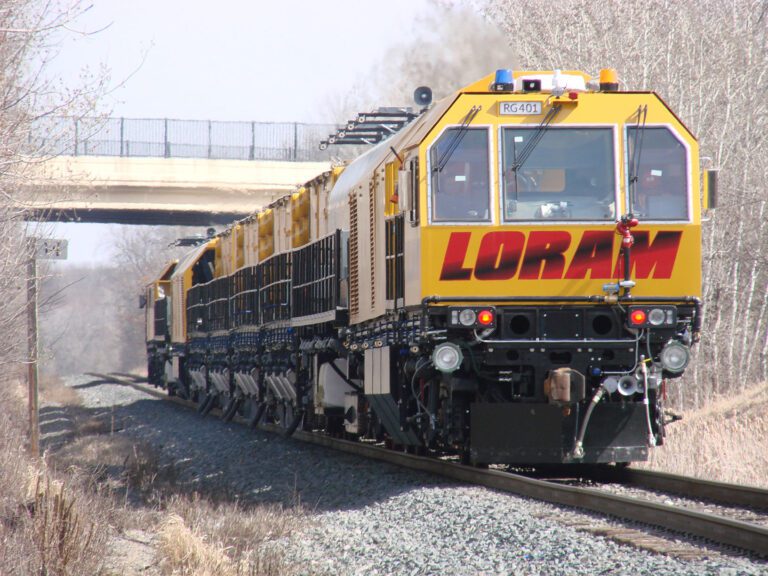
| Rotary End-Face Grinding | 15 – 24 km/h | High-speed rotating rail grinding stones driven by electric/hydraulic motors at controlled angles (such as Loram 260x90x154 wheels or Harsco 152x80xM20 wheels). | Corrective grinding, pre-grinding, heavy-haul lines. | Advantage: High Metal Removal Rate (MRR). Limitation: Requires dedicated track possessions. |
| High-Speed Grinding (HSG) | 60 – 80 km/h | Passive rotational grinding units operating at high train speeds without motor drives, as utilized in Vossloh HSG-city systems. | High-speed rail (HSR) preventative maintenance. | Advantage: Can operate within normal traffic schedules. Limitation: Low single-pass removal capacity (<0.05 mm). |
| Oscillating Grinding | 3 – 5 km/h | Longitudinal/transverse reciprocating motion of grinding shoes or stones. | Complex turnout areas, expansion joints, switches. | Advantage: Precise geometry copying. Limitation: Slow operating speed. |
| Portable / Hand-Guided | Walk-behind / Manual | Compact petrol or electric hand-held rail grinders. | Weld joint finishing, localized spot repair. | Advantage: Highly flexible, low cost. Limitation: Heavily dependent on operator skill. |
3. Scenario-Based Engineering Application Matrix
Railway networks differ significantly in axle loads and operational dynamics. Maintenance strategies must be tailored accordingly:
3.1 Heavy-Haul Freight (e.g., Australia, North America)
- Operating Conditions: High axle loads (30–35+ tonnes) and severe curve wear.
- Strategy: Heavy preventative and corrective grinding. Requires robust Zirconia Alumina grinding wheels capable of aggressive cutting to control gauge corner cracking and severe corrugation.
3.2 High-Speed Passenger Rail (e.g., Europe, Asia)
- Operating Conditions: High train speeds (>250 km/h) demanding extreme surface smoothness.
- Strategy: Emphasizes High-Speed Grinding (HSG) and precision preventative grinding to minimize dynamic vibration and cabin noise without removing excessive rail steel.
3.3 Urban Transit & Metros
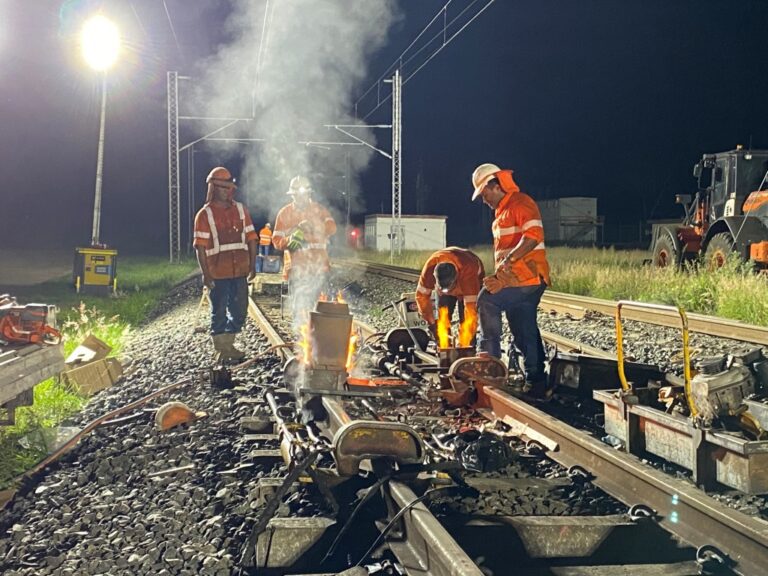
- Operating Conditions: Constrained by tight night-time maintenance windows and strict noise abatement laws in residential areas.
- Strategy: Modular equipment or High-Speed Urban Grinding to control acoustic roughness. Learn more about subway track care and metro grinding solutions.
4. Quality Control Standards (EN 13231-3 Compliance)
To evaluate the success of a rail grinding intervention, engineers measure three primary technical metrics according to international standards like EN 13231-3:
- Longitudinal Flatness: Peak-to-peak amplitude of residual roughness must remain within strict limits (e.g., < 0.01 mm for short wavelengths between 30–100 mm).
- Transverse Profile Deviation: The ground profile must not deviate by more than ±0.2 mm from the designated target profile.
- Surface Roughness (Ra): High-speed tracks typically require an average surface roughness of Ra < 10 μm to prevent acoustic noise and dynamic excitation.
5. Consumable Selection: Abrasive Rail Grinding Wheels
Selecting the optimal industrial grinding wheel formulation is critical to maximizing Metal Removal Rate (MRR), preventing thermal damage (rail burning/blue spots), and controlling operating costs.
| Rail Material & Type | Recommended Grain Type | Recommended Bond | Performance Characteristics |
|---|---|---|---|
| Standard Carbon Steel Rails | Premium Aluminum Oxide | High-Strength Resinoid | Balanced wear resistance and steady cutting performance. |
| Head-Hardened / Heat-Treated Rails | Zirconia Alumina (ZA) or Ceramic Grain | Modified Resinoid with Heat Dissipators | Ultra-aggressive cutting, self-sharpening, prevents thermal surface damage. |
Key Formulation Considerations:
- Zirconia Alumina (ZA): Self-sharpening grains ideal for heavy-haul, head-hardened rails requiring maximum metal removal.
- Ceramic Grain: Provides extreme durability and cool cutting, preventing micro-structural changes (white etching layers) on high-speed rail lines.
- Bonding Technology: Heavy-duty resinoid (organic) bonds reinforced with fiberglass mesh are standard, absorbing high dynamic impacts at rotational speeds up to 80 m/s.
Looking for customized grinding wheel solutions tailored to your track conditions? Contact Jumbo Abrasives engineering team for technical consultations and testing samples.
6. Frequently Asked Questions (FAQ)
Q1: What is the difference between rail grinding and rail milling?
A: Rail grinding uses high-speed abrasive wheels to remove fine layers of steel (0.05–0.5 mm) for profile fine-tuning and micro-defect removal. Rail milling uses mechanical rotary milling cutters to strip thick layers of steel (1.0–3.0 mm) in a single pass, ideal for severely damaged tracks where grinding would take too long.
Q2: Why is it important to remove the decarburized layer on new rails?
A: During the manufacturing and hot-rolling process, carbon escapes from the outer steel surface, leaving a soft, low-strength decarburized layer. If left on new tracks, this layer rapidly deforms under train wheel loads, triggering early micro-cracking and head checks.
Q3: How do grinding wheels prevent thermal damage (rail burning) during operation?
A: High-quality rail grinding wheels use specialized filler materials (such as pyrites or cryolite) and micro-porous resin structures. These act as active cooling agents and facilitate heat dissipation, keeping cutting temperatures below the phase-transformation threshold of rail steel.
7. Conclusion
A modern rail maintenance strategy relies on the strategic integration of Pre-Grinding, Preventative Maintenance, and Profile Control. Selecting the appropriate grinding technology and high-performance abrasive wheels allows railway operators to optimize wheel-rail interaction, ensure operational safety, and achieve maximum asset longevity.