 Specialty rail grinding
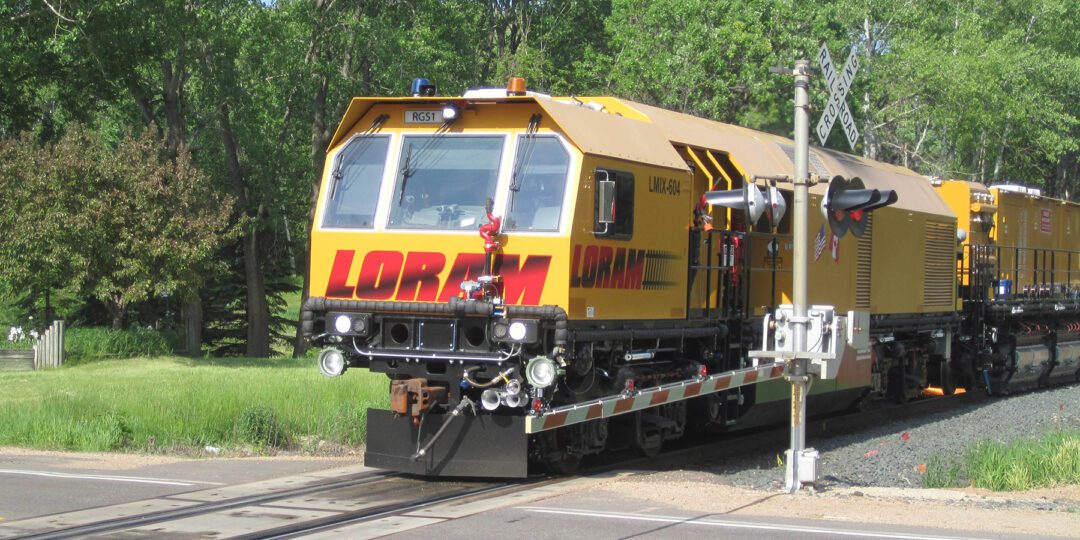
Loram RGS Specialty Rail Grinder
The Loram RGS is a 24-stone specialty rail grinder for switches, crossings, obstacles, tangent rail and curves. Loram publishes 23 kW motors, grinding speeds of 3–20 km/h and track-gauge configurations from 1,000 to 1,600 mm.
Last source review: 16 September 2026 · Manufacturer data
What is the Loram RGS?
The RGS is Loram’s specialty rail-grinding platform for infrastructure that a production grinder cannot treat continuously. Its 12 independently positioned motors per rail are intended to work around switches, crossings and other obstacles while also grinding open tangent and curved rail.
Loram states that a crossing or each switch unit is typically ground in two to five minutes and that full rail-head coverage can require as few as three passes. These are manufacturer statements and remain subject to rail condition, required metal removal and operating constraints.
Best-fit summary: choose the RGS when switches, crossings and track obstacles are a central part of the grinding scope but the machine must also handle tangent and curved open rail. It is a specialty grinder, not simply a smaller production train. See the Loram-Leitfaden zum Schienenschleifen for the wider machine-family context.
Loram RGS specifications: motors, speed and track gauge
Values below are taken from Loram’s published RGS page. Delivered configurations and local operating limits remain controlling.
Loram RGS features and grinding configuration
Independent modules
Tilt-and-shift modules position stones around rail-head geometry and obstacles.
Pattern control
Storage for up to 100 grinding patterns with 72 angle settings.
Variable power
Motor-power reductions allow the operator to vary surface finish.
Fire controls
Spark guards, flame-resistant hydraulic fluid and a 17,500 L water tank.
Where is the Loram RGS used?
Flexible modules work around components that interrupt continuous grinding.
Specialty grinding around crossing geometry, subject to asset requirements.
The RGS can also treat open rail and curves as a dual-purpose machine.
Dedicated specialty work or mixed specialty and open-rail programs.
How fast can the Loram RGS grind switches and crossings?
Loram publishes typical grinding times of two to five minutes for a crossing or each switch unit, and states that as few as three passes can cover the rail head. Treat these as planning references—not guaranteed outcomes—because defect depth, target profile, possession rules, rail hardness and site geometry affect the work.
Loram RGS vs RGC vs RGX
Selection summary: RGS is the specialty choice when switches, crossings and obstacles are central to the scope; RGC serves compact production work and RGX serves transit-focused programs. Final selection depends on the network and delivered configuration.
How to specify grinding wheels for a Loram RGS
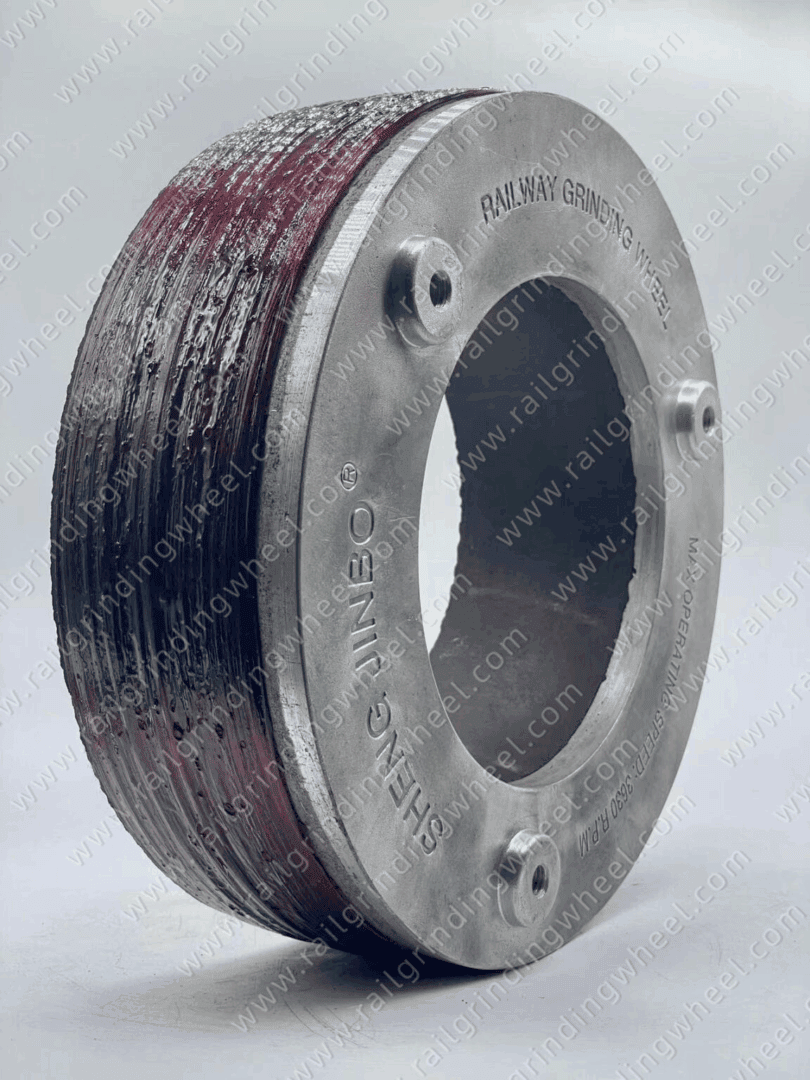
Loram’s public RGS page does not publish a complete wheel dimension, mounting drawing, abrasive specification or approved speed rating. Do not select a replacement wheel from the machine model alone.
- Maschine
- Loram RGS
- Schleifmotoren
- 24 × 23 kW
- Wheel dimensions
- Confirm from marking
- Mounting and RPM
- Confirm before quotation
What to send for an RGS grinding-wheel quotation
Loram RGS FAQ
What is the Loram RGS?
A 24-stone specialty rail grinder designed for switches, crossings, obstacles, tangent rail and curves.
How many grinding motors does the RGS use?
Loram publishes 24 electric grinding motors rated at 23 kW each, with 12 motors per rail.
How fast can the RGS grind rail?
The published grinding-speed range is 3–20 km/h; self-propelled travel speed is up to 100 km/h.
What track gauges can the RGS support?
Loram publishes a range of 1,000–1,600 mm. Confirm the delivered configuration.
Can two RGS machines be joined?
Loram states that machines can be joined to create a 48-stone rail grinder.
How quickly can the RGS grind a switch or crossing?
Loram states that the RGS typically grinds a crossing or each switch unit in two to five minutes. Actual time depends on rail condition, target profile, material removal and site restrictions.
Can the Loram RGS grind open rail?
Yes. Loram describes the RGS as capable of grinding tangent and curved rail as well as switches, crossings and other obstacles.
What grinding wheel fits a Loram RGS?
Confirm the wheel marking, dimensions, mounting, maximum RPM and approved documentation. The model name alone is insufficient.
What is needed for an RGS wheel quotation?
Provide the grinding-unit details, wheel marking, dimensions, mounting, RPM, application, quantity and destination country.
References and review method
- Loram RGS product page — manufacturer specifications and source image.
- Loram-Leitfaden zum Schienenschleifen.
- Rail grinding train wheel category.
Editorial review: compiled from Loram manufacturer data on 16 September 2026. Jumbo Abrasives is not the RGS manufacturer. Wheel compatibility requires the existing marking, dimensions, mounting and approved documentation.