CRRC GMC-96B Rail Grinding Train
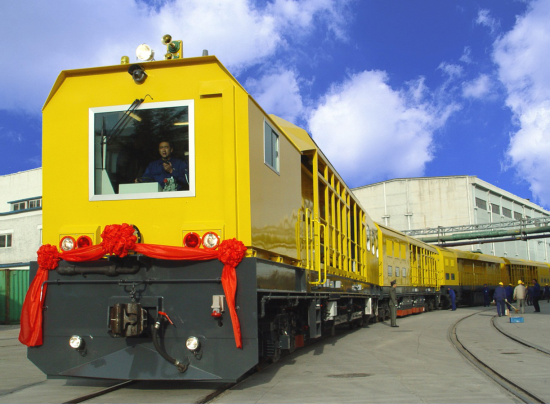
The CRRC GMC-96B is a seven-car, 96-head rail grinding train for preventive and corrective treatment on mainline and high-speed railway infrastructure. CRRC lists a 145 m train length, bidirectional grinding at 3–15 km/h, 100 km/h self-propelled speed and 120 km/h maximum coupled speed.
Technical profile based on CRRC manufacturer data and engineering literature
What is the CRRC GMC-96B?
The GMC-96B is a large production rail grinder developed within CRRC for high-output mainline maintenance. It combines high-speed hydromechanical transmission for transfer with hydrostatic low-constant-speed transmission for controlled grinding passes.
The train carries rail-profile and corrugation measurement equipment so operators can plan grinding patterns and verify the longitudinal result. Published engineering literature describes one power car and six grinding cars, 96 individually angle- and pressure-adjustable grinding wheels, and 99 grinding modes.
Direct answer: the CRRC GMC-96B is a 145 m, seven-car, 96-head grinding train that works in both directions at 3–15 km/h. It is designed for periodic and corrective rail reprofiling, not switch-only or hand-guided grinding.
Entity clarification: this page covers the CRRC-produced GMC-96B. It is not the GMC-96X model catalogued under GEMAC. Similar model numbers do not establish a common manufacturer, grinding system or consumable specification.
What rail defects does the GMC-96B treat?
Corrective passes reduce longitudinal wave wear and restore a smoother running surface.
Multiple adjustable heads distribute material removal across the rail head and gauge corner.
Grinding programmes address rail lip formation and profile deviation under repeated traffic.
CRRC lists saddle wear, depressed welds and squamous or fish-scale cracking among the treatment targets.
Programme selection depends on the measured defect, rail section, target profile, required removal and available possession time. The machine is used for both periodic maintenance and corrective restoration.
CRRC GMC-96B specifications
Which GMC-96B values require fleet confirmation?
The CRRC Chinese GMC-96B page is the controlling source used here for formation length, travel speeds, grinding speed and longitudinal accuracy. Model-specific engineering literature supplies the 96-head arrangement, 99 modes, rail sections and the 250 m working-radius reference.
GMC-96B-focused literature states 250 m. The separate CRRC English Type GMC96 page states 300 m and may describe another configuration or a broader type designation.
One engineering paper records −70° to +20°; a later comparative industry table records −70° to +15°. Use the fleet manual for programme limits.
The selected product and SPENO RR24 reference use 78 mm. A third-party GMC-96B project document records 77 mm.
GMC-96B is assigned to CRRC in this page. GMC-96X remains a separate GEMAC library entity and must not inherit the 96B data set.
Procurement rule: model-family data is not a substitute for the vehicle serial number, grinding-unit drawing, existing wheel marking and operator-approved consumable list.
How does the GMC-96B grinding system work?
Profile and corrugation systems establish the starting rail condition and provide data for the treatment plan.
One of the available grinding modes assigns wheel angles, pressure and removal distribution across the rail head.
Ninety-six abrasive units work during a controlled 3–15 km/h pass using low-constant-speed transmission.
Post-pass measurements are compared with longitudinal and transverse acceptance targets.
CRRC GMC-96B vs. GEMAC GMC-96X
The shared “96” designation describes grinding-unit count, not interchangeable equipment. Procurement records should state the complete suffix, manufacturer, fleet number, installed grinding-unit drawing and existing wheel marking.
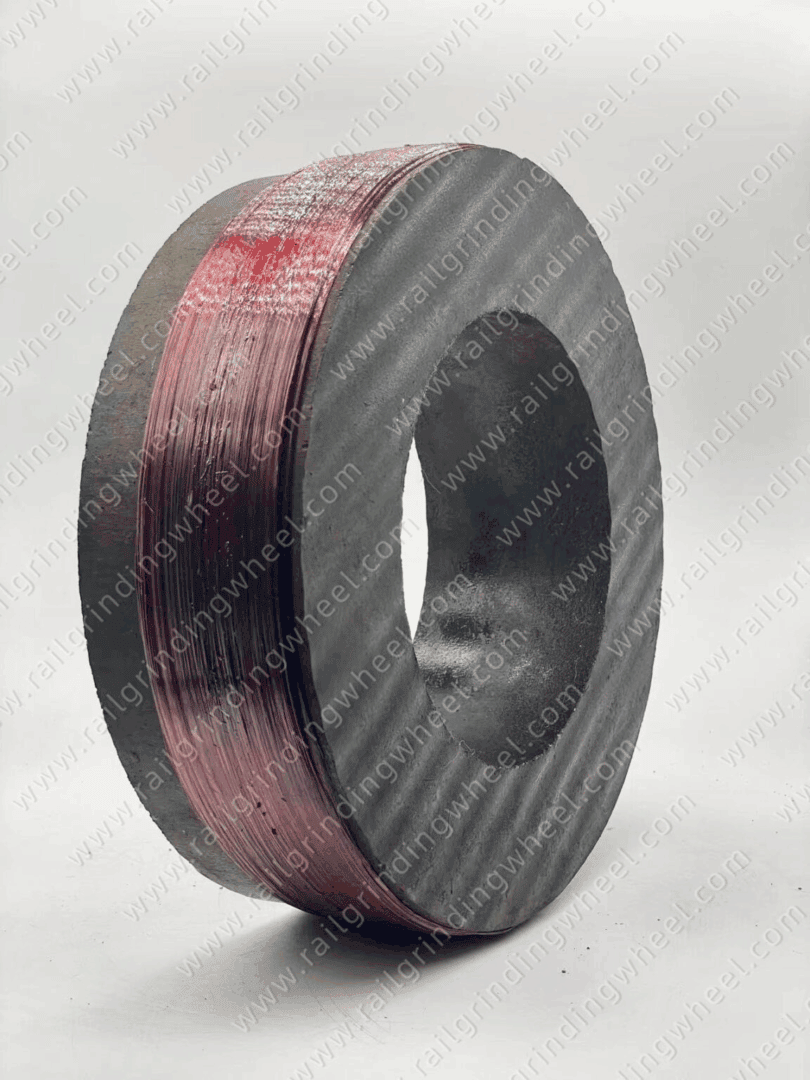
250 × 78 × 150 mm rail grinding wheel
This page uses the same wheel reference as the SPENO RR24 entry: a 250 × 78 × 150 mm resin-bonded zirconia-alumina rail grinding wheel with a published maximum peripheral speed of 50 m/s. Compatibility must be confirmed against the installed GMC-96B grinding unit.
- Dimensions
- 250 × 78 × 150 mm
- Outside diameter
- 250 mm
- Thickness
- 78 mm
- Bore
- 150 mm
- Abrasive
- Zirconia alumina
- Bond
- Resin bond
- Maximum speed
- 50 m/s
- Machine reference
- GMC-96B / selected RR24
Dimensional verification required: one third-party project document lists a GMC-96B wheel as 250 × 77 × 150 mm, while this page follows the user-confirmed RR24 reference of 250 × 78 × 150 mm. Confirm the actual wheel label, thickness tolerance, mounting geometry, maximum RPM and approved drawing before ordering.
Information required before ordering
CRRC GMC-96B FAQ
What is the CRRC GMC-96B?
It is a seven-car, 96-head production rail grinding train for preventive and corrective mainline treatment.
Who manufactures the GMC-96B?
The GMC-96B covered here is a CRRC-produced machine. It should not be confused with the GMC-96X catalogued under GEMAC.
How many grinding wheels does it use?
Published engineering literature describes 96 angle- and pressure-adjustable grinding wheels.
What is the GMC-96B grinding speed?
CRRC publishes a bidirectional grinding-speed range of 3–15 km/h.
How long is the train?
CRRC lists seven cars and a total length of 145 m. Some technical literature rounds the length to about 150 m.
Why do some GMC-96B specifications differ?
Sources may describe different fleet configurations or use the broader GMC96 designation. The vehicle manual and serial-number-specific drawings should control curve radius, angle limits and consumables.
What defects can it remove?
Applications include corrugation, rail lip, saddle wear, depressed welds, profile deviation and fish-scale surface cracking.
Which grinding wheel is referenced?
This page references a 250 × 78 × 150 mm resin-bonded zirconia-alumina wheel, matching the SPENO RR24 page. Fleet-specific compatibility remains subject to confirmation.
Are GMC-96B and GMC-96X consumables interchangeable?
Do not assume interchangeability. Confirm the full model suffix, manufacturer, wheel marking, dimensions, mounting geometry, RPM and approved grinding-unit drawing.
Sources and review notes
- CRRC GMC-96B official product reference — formation, speeds, applications and longitudinal accuracy.
- CRRC Beijing Erqi industry product range.
- Journal of Mechanical Engineering paper — grinding-unit count, formation, angle range, modes, curve radius and comparative GMC-96X data.
- SPENO RR24 model page — reference wheel specification requested for this entry.
- 250 × 78 × 150 mm wheel product page.
Prepared 17 September 2026. Manufacturer claims and literature values are attributed separately. Wheel compatibility remains subject to fleet-specific technical verification.