 Compact production grinding
Loram RGC Rail Grinder
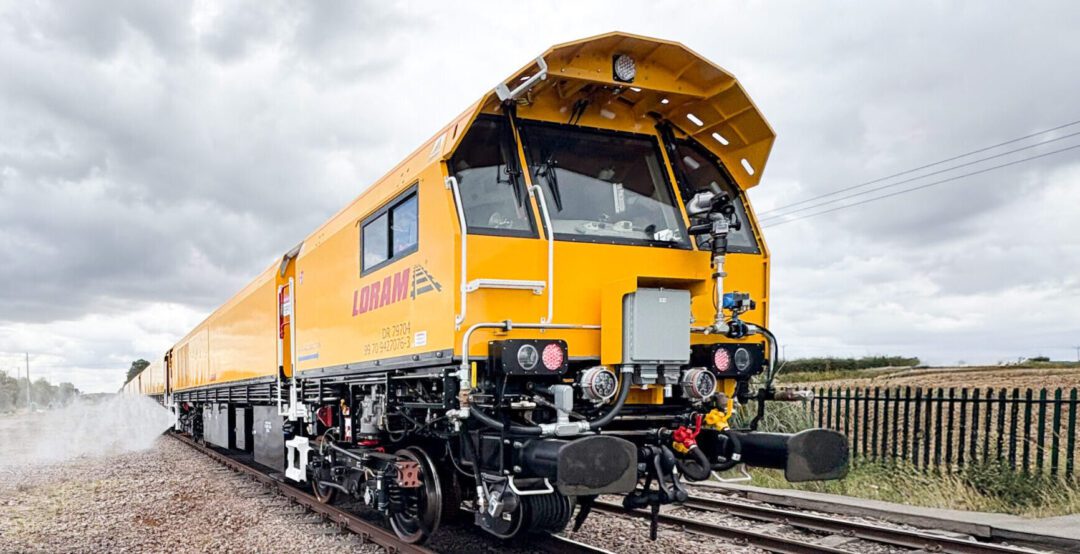
The Loram RGC is a compact production rail grinder for passenger, commuter, freight and high-speed networks. Loram publishes configurations with up to 40 grinding stones, 22.4 kW motors, grinding speeds up to 32 km/h and track gauges from 1,067 to 1,435 mm.
What is the Loram RGC?
The RGC combines mainline production-grinding capability with a reduced platform footprint for passenger, commuter and urban networks. Loram states that it is designed around international construction, fire-safety, axle-load and clearance requirements, including the W6A clearance diagram.
Independent tilt-and-shift modules position the stones across the rail head. Depending on the delivered configuration, the RGC can support production grinding on plain line and selected specialty assets, including work around third-rail infrastructure.
For a broader comparison of Loram production, specialty and transit grinders, see the Loram rail grinding guide.
Loram RGC specifications: stones, speed and track gauge
Values are taken from Loram’s published RGC page. The headline configuration is up to 40 grinding stones, a grinding speed up to 32 km/h and a published gauge range of 1,067–1,435 mm. Delivered consists and operating limits remain project specific.
Loram RGC features and machine configuration
Compact consist
A reduced footprint for international passenger and commuter networks.
Tilt-and-shift modules
Independent modules position stones across the complete rail-head profile.
Redundant traction
Loram lists redundant engine and traction systems per consist.
Risk controls
Dust collection, fire suppression, water sprays and flame-resistant hydraulic fluid.
Loram RGC rail measurement and surface imaging
Loram lists RailPro®, optical transverse and longitudinal rail measurement, and HD geo-tagged rail surface imaging as optional features. These systems can support grind planning and post-work verification.
Measurement equipment is optional. Confirm the installed sensors, software, data outputs and acceptance procedure for the individual consist.
Where is the Loram RGC used?
Production grinding where clearances and axle loads favour a compact consist.
Rail-head reprofiling and treatment of corrugation and profile deviation.
Loram describes the RGC as EN 13231 capable for applicable grinding-quality requirements.
Configurable for energised or de-energised third-rail applications.
Loram RGC standards: EN 50128 and EN 13231
Loram states that machine software is developed to EN 50128 and that the platform is EN 13231 capable. Project acceptance, local rules and delivered configuration remain controlling.
Loram RGC vs C44 vs RG400
Selection summary: RGC is the compact option in this comparison; C44 expands the international production configuration, while RG400 targets higher-output production programs. Final selection depends on clearance, axle load, possession time, required metal removal and the delivered consist.
How to specify grinding wheels for a Loram RGC
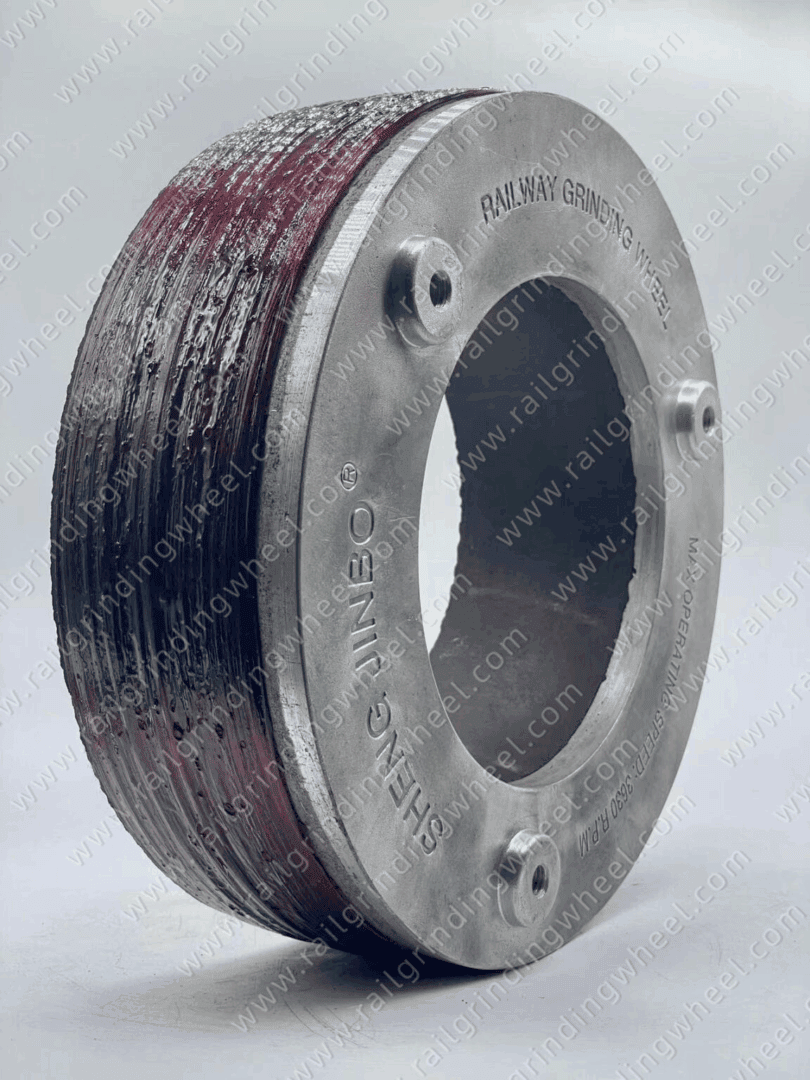
Loram’s public RGC page does not publish a complete wheel dimension, mounting interface, speed rating or approved drawing. Do not select a replacement wheel from the machine model alone.
- Machine
- Loram RGC
- Grinding stones
- Up to 40
- Wheel dimensions
- Confirm from marking
- Mounting and RPM
- Confirm before quotation
What to send for an RGC grinding-wheel quotation
Loram RGC FAQ
What is the Loram RGC?
A compact production rail grinder for passenger, commuter, freight and high-speed networks.
How many grinding stones does an RGC use?
Loram publishes configurations with up to 40 grinding stones.
How fast can the RGC grind rail?
Up to 32 km/h, with travel speed up to 112 km/h, subject to configuration and conditions.
What track gauges can the RGC support?
The published range is 1,067–1,435 mm, with custom gauge available.
What grinding wheel fits an RGC?
Confirm the existing wheel marking, dimensions, mounting, maximum RPM and machine documentation. The machine model alone is not enough to identify a safe replacement wheel.
Can the Loram RGC work around third-rail infrastructure?
Loram describes the RGC as configurable for energised or de-energised third-rail applications. Confirm the delivered machine configuration and the network operating procedure.
What information is needed to quote RGC grinding wheels?
Provide the RGC consist or serial information, existing wheel marking, full dimensions, mounting interface, maximum RPM, application, quantity and destination country.
References and review method
- Loram RGC product page — manufacturer data and source image.
- Loram rail grinding guide.
- Rail grinding train wheel category.
Editorial review: Compiled from Loram manufacturer data on 16 September 2026. Jumbo Abrasives is not the RGC manufacturer. Wheel compatibility requires the existing wheel marking, dimensions, mounting details and approved documentation.