 Toplu taşıma demiryolu raylarının taşlanması
Loram MRG Transit Rail Grinder
The Loram MRG is a compact 6- or 8-stone transit rail grinder for metros, subways and other restricted-clearance systems. Loram publishes grades up to 6%, curves down to approximately 18 m and a working speed of about 0.1–5 km/h.
Last source review: 16 September 2026 · Manufacturer data
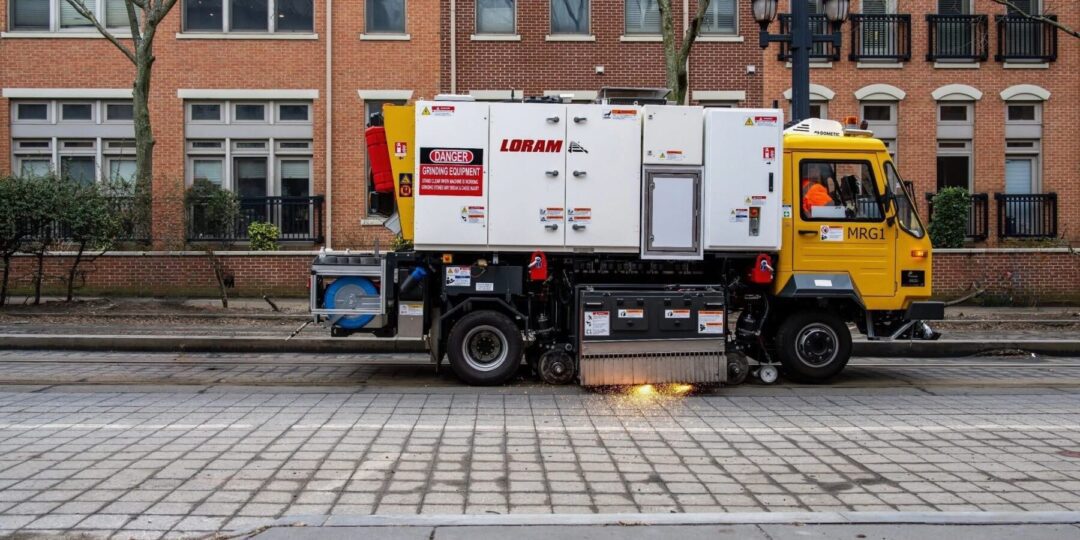
What is the Loram MRG?
The MRG is Loram’s compact transit rail grinder for networks with tight clearance envelopes, steep grades and sharp curves. It is designed to reprofile the rail head, remove corrugation and remove mill scale in subway, metro and other urban rail environments.
Road and rail transportability allows the machine to be deployed close to the worksite. Loram also lists EU noise-emission compliance and quick start-up as features relevant to night maintenance windows.
Best-fit summary: consider MRG when compact dimensions, up to 6% grades, approximately 18 m curves and rapid urban deployment are central requirements. Model-name note: Loram’s current source page uses “MRG”; some older or secondary listings use “MRG1”. Verify the machine data plate and documentation before treating those labels as the same configuration. For larger transit and production platforms, see the Loram ray taşlama kılavuzu.
Loram MRG specifications: size, speed, radius and gauge
Values below are taken from Loram’s published MRG page. Delivered configurations, infrastructure and local operating rules remain controlling.
Loram MRG features and optional equipment
Compact envelope
Designed for subways and transit systems with restricted clearances.
Sharp curves and grades
Published for approximately 18 m curves and grades up to 6%.
Profile measurement
Optional non-contact transverse rail-profile measurement system.
Urban deployment
Road/rail transportability, noise compliance and rapid start-up near the worksite.
Loram MRG transit grinder images
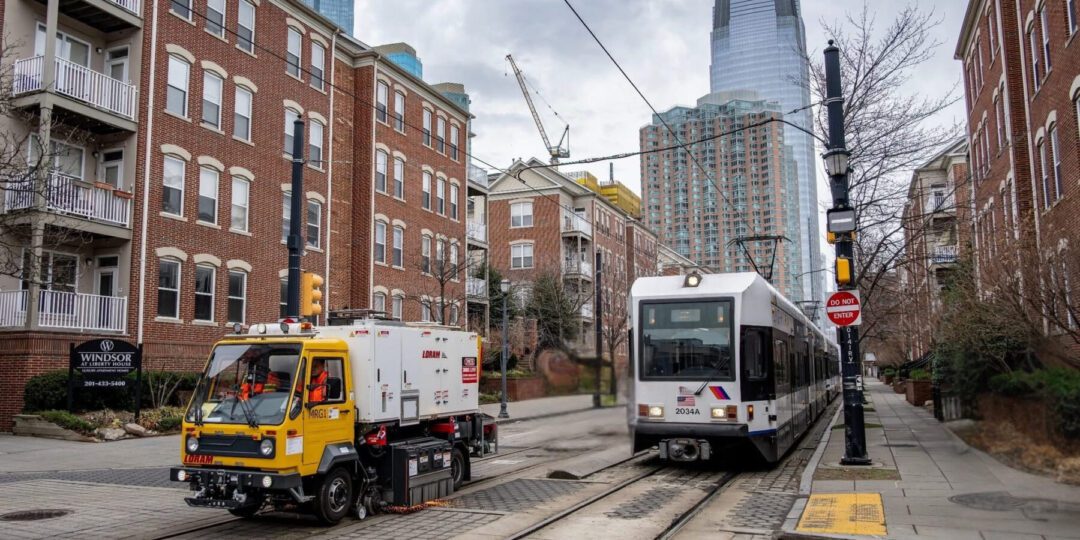
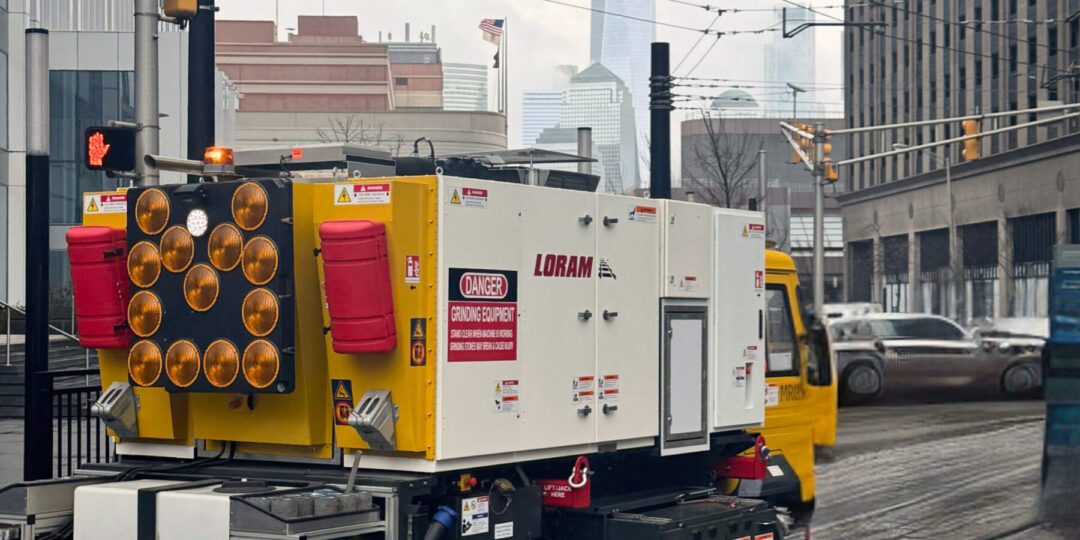
All three images are sourced from Loram’s official MRG page.
Where is the Loram MRG used?
Compact grinding where tunnel and structure clearances restrict larger machines.
Rail reprofiling on curves down to the published approximate 18 m radius.
Controlled grinding to address rail corrugation and restore rail-head profile.
Grinding newly installed or renewed rail where mill-scale treatment is required.
Can the Loram MRG measure rail profile?
Loram lists an optional non-contact transverse rail-profile measurement system. Confirm the sensor package, data format, calibration, reporting and acceptance criteria for the delivered machine. The public page does not publish complete metal-removal or surface-finish guarantees.
Loram MRG vs RGX vs RGC
Selection summary: MRG is the compact choice for tight urban geometry and rapid deployment; RGX targets broader transit programs, while RGC is a production-grinding platform. Confirm clearance, gauge, axle load, curve radius and required output.
How to specify grinding wheels for a Loram MRG
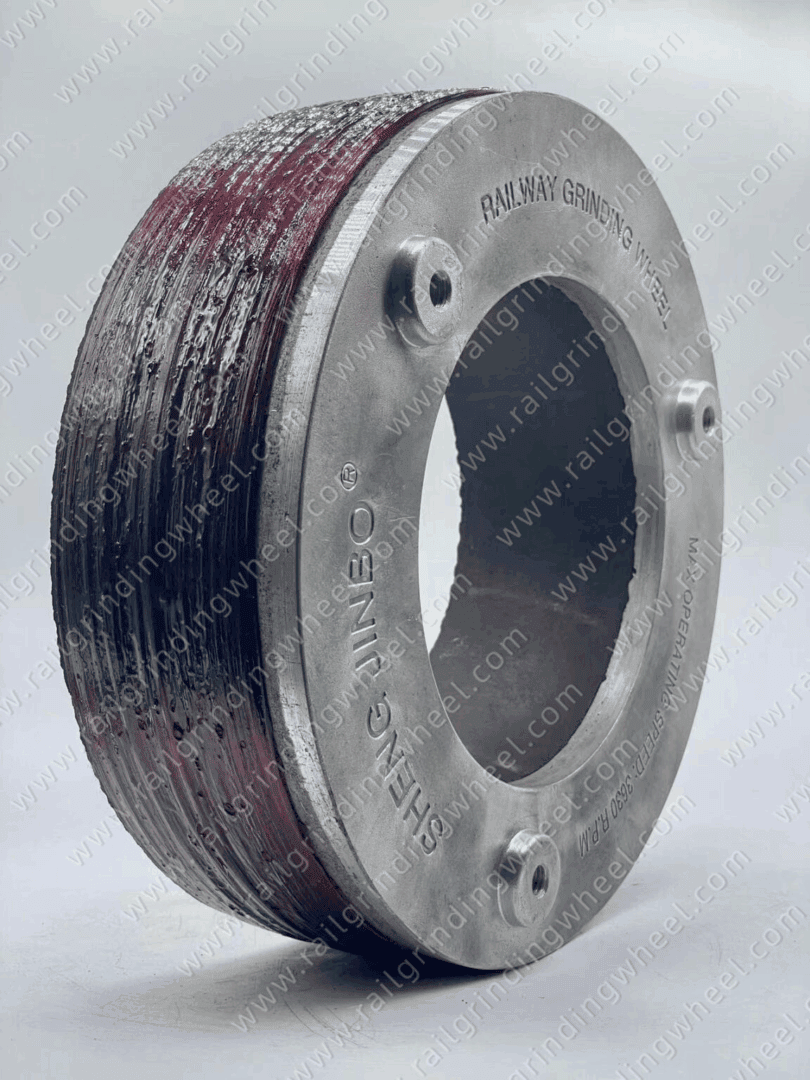
Loram’s public MRG page does not publish complete wheel dimensions, mounting interface, abrasive specification or approved wheel speed. Do not select a replacement wheel from the machine model alone.
- Makine
- Loram MRG
- Configuration
- 6 or 8 stones
- Wheel dimensions
- Confirm from marking
- Mounting and RPM
- Confirm before quotation
What to send for an MRG grinding-wheel quotation
Loram MRG FAQ
What is the Loram MRG?
A compact 6- or 8-stone transit rail grinder for metros, subways and other restricted-clearance systems.
How many grinding stones does the MRG use?
Loram lists optional 6- or 8-stone configurations.
How fast does the MRG grind?
Loram’s overview states approximately 0.1–5 km/h. The specification table separately lists variable motor-spindle speed up to 6,000 rpm.
What is the minimum curve radius?
Loram publishes approximately 18 m for grinding and travel, subject to railway infrastructure.
What track gauges can the MRG support?
The published metric range is 1,000–1,520 mm and the machine is described as gauge-convertible. Confirm the delivered configuration because the source’s imperial and metric line is inconsistent.
Can the MRG measure rail profile?
An optional non-contact transverse rail-profile measurement system is listed by Loram.
Is the Loram MRG suitable for night work?
Loram lists EU noise-emission compliance and describes the MRG as suitable for urban environments at night. Local noise limits, access rules and the delivered machine configuration still apply.
Is Loram MRG the same as MRG1?
Loram’s current manufacturer page uses the model name MRG. Some older or secondary listings use MRG1; confirm the machine data plate, serial number and technical documentation before assuming they identify the same configuration.
What grinding wheel fits a Loram MRG?
Confirm the wheel marking, dimensions, mounting, approved maximum RPM and machine documentation. The model name alone is insufficient.
What is needed for an MRG wheel quotation?
Provide the configuration, serial information, wheel marking, dimensions, mounting, RPM, application, quantity and destination country.
References and review method
- Loram MRG product page — manufacturer specifications and source images.
- Loram ray taşlama kılavuzu.
- Rail grinding train wheel category.
Editorial review: compiled from Loram manufacturer data on 16 September 2026. Jumbo Abrasives is not the MRG manufacturer. Wheel compatibility requires the existing marking, dimensions, mounting and approved documentation.