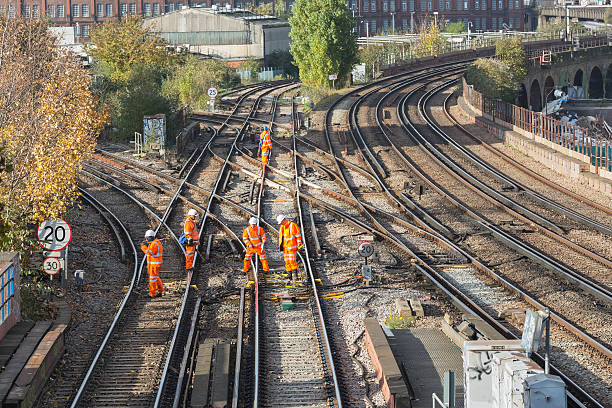
Rail track maintenance is carried out to ensure that the track is in good condition and that the train runs safely, smoothly at the specified speed. Various work for rail track maintenance is needed. Main works include track renewal and repair to restore the performance of each component of the track. Regular maintenance work is also needed to prevent and eliminate the deformation caused by the power of the train and other influences.
Why is track maintenance necessary?
Railroad tracks are subjected to forces generated by the gravity of the train and under the influence of the natural environment. Many kinds of damage will occur when the rail lines are not in good condition. Common damages include:
- The changes in the spatial position of the railway line and its various components, such as the crawling of the line, the expansion or reduction of the gauge, the misalignment of the line, the uneven sinking or freezing of the line, etc.
- The rail track components are worn and fatigued.
- The sleeper is damaged, and the trackbed is dirty.

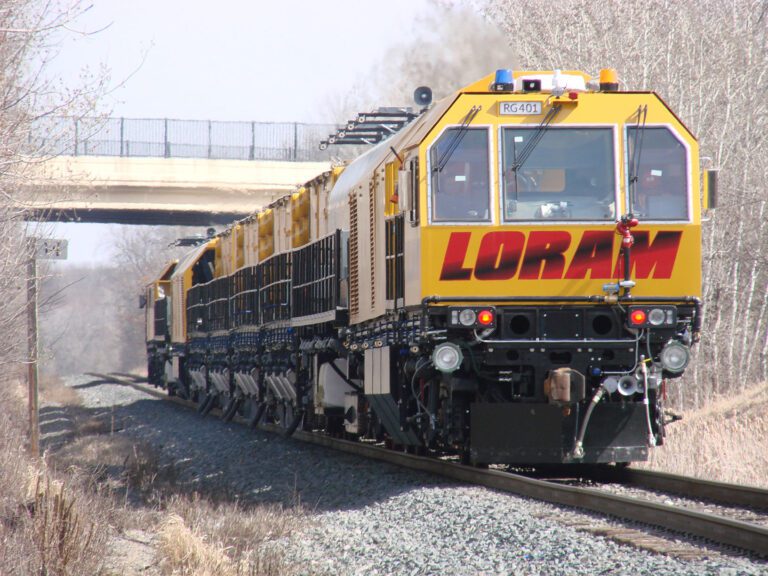
Railway line damages affect the normal operation of trains and even endangers the safety of trains. To ensure driving safety and track components are in good condition, extend the service life of track components, and avoid economic losses caused by long-term disrepair of track equipment, it is necessary to investigate, develop, and implement maintenance systems to ensure good track conditions. Workers can get these jobs done by using specialized rail maintenance equipment, such as a rail grinder, a rail cutting machine, a rail drilling machine, a rail tensor, a rail tamper, a rail bender, a rail bolt wrench, a ballast cleaner, etc.
Works for railroad track maintenance
The maintenance works include line status inspection and repair operations.
Rail repair and replacement

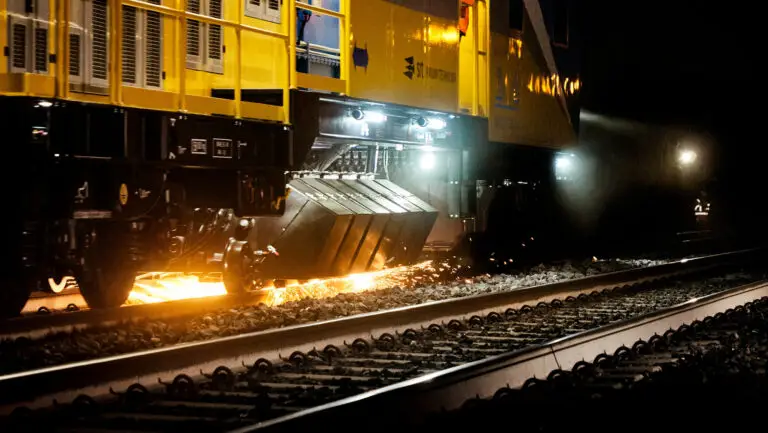
- Do grindings for rails, railway switches(railway turnout). Rail grinding is used to eliminate the uneven surface of rails. The flat and smooth rail surface is essential for trains.
- Lubricate the rails. It is an effective way for reducing the wear of rails, hence prolonging the service life. Lubricating is especially efficient for slowing the side wear of rails, which can increase the life of the rail 3-5 times or even 10 times.
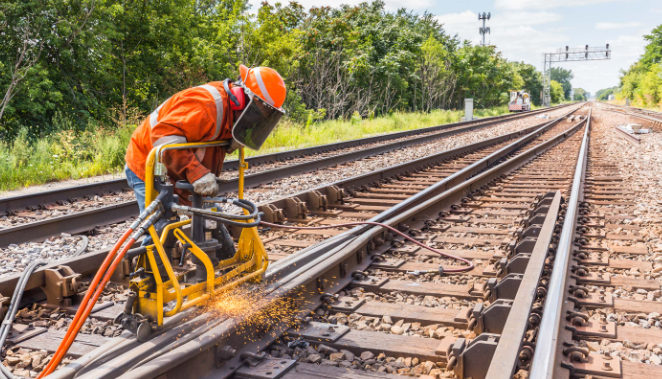
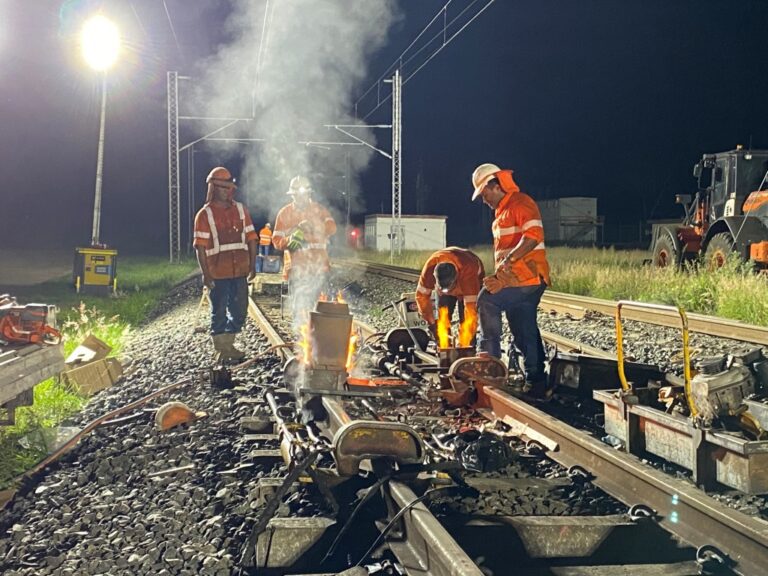
- Welding repair.
When railroad rails, including rail switches and railroad frogs, are worn out and cracked, timely welding is needed. One common way is to use oxygen-acetylene welding, arc welding, and oxygen-acetylene flame metal powder spray welding.
- Renovation of the geometric state of the track, including flattening the line, correcting the direction, correcting the gauge, correcting the bottom slope of the rail, adjusting the rail seam and anti-climbing locking line, etc. Some of the rail tracks may need to be replaced.
- Replace the railroad track.
A single railroad track can be replaced without interrupting other sections of rail.
Sleeper replace
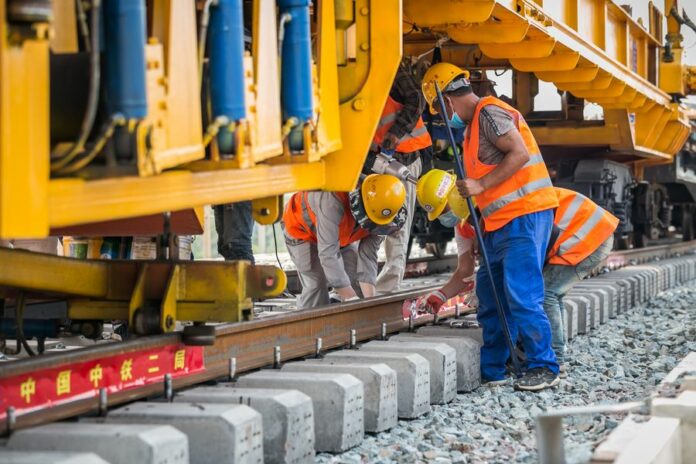
Maintaining and individually replacing damaged sleepers. The process can be summarized in several steps.
- Process of replacing individual wooden sleepers
Pre-drilled spike holes and tie heads. → Scattered wooden sleepers →Remove rail fasteners → Loosen the ballast → Remove the spikes → Pull out the old wooden sleeper → Place in the new sleeper → Tamping →Backfilling
- Process of replacing individual concrete sleepers
Scattered sleepers → Remove the fasteners and gauge rods → Loosen the ballast → Unload the rail clips → Pull out the old concrete sleeper → Level the ballast → Place in the new sleeper → Fix new clips → Tamping → Install gauge rods and equipment preventing rail crawling → Inspection
Ballast redistribute

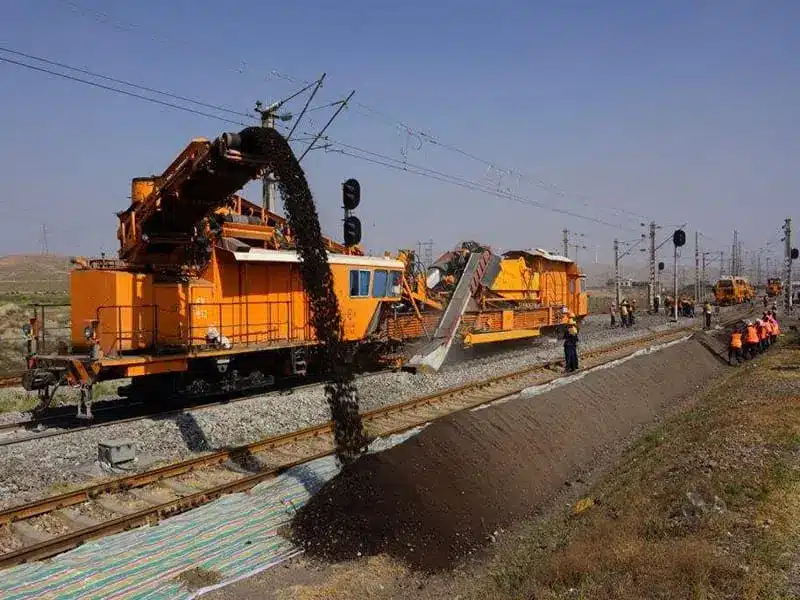
Ballast can transfer the load from the train wheels and rails. It also provides a stable surface for rails to rest upon. What’s more, the drainage of the railway relies on the ballast. So, when the unclean rate of ballast is between 20-30% and the drainage is affected or mud occurs, it must be cleaned or redistributed. The usual way is to clean and add ballast to make it compact and flexible, and have good drainage performance.
According to different sections, the ballast cleaning can be divided into two types: bottom cleaning and non-bottom cleaning, as well as side slope ballast cleaning and full-section ballast cleaning. Line maintenance is mainly carried out without breaking the bottom and cleaning the sleeper box and side ramp ballast. According to different machines, the ballast bed cleaning can be divided into manual cleaning, small side slope cleaning machine, and large cleaning unit.
Subgrade stabilization
Maintain and repair the roadbed, drainage and protection, and reinforcement equipment.
Other maintenance work
Renovate crossings and line signs.
The adequate maintenance of the railway track guarantees the rails serve “ in order ”. Daily inspection is a routine inspection carried out regularly. Regular inspections, comprehensive inspections of line equipment are carried out in spring and autumn. The autumn inspection results are the original data for the preparation of equipment technical files and the basis for formulating the maintenance work plan for the next year. Special inspection, including inspection of rail status, line dynamics, line longitudinal section, and line plane.